
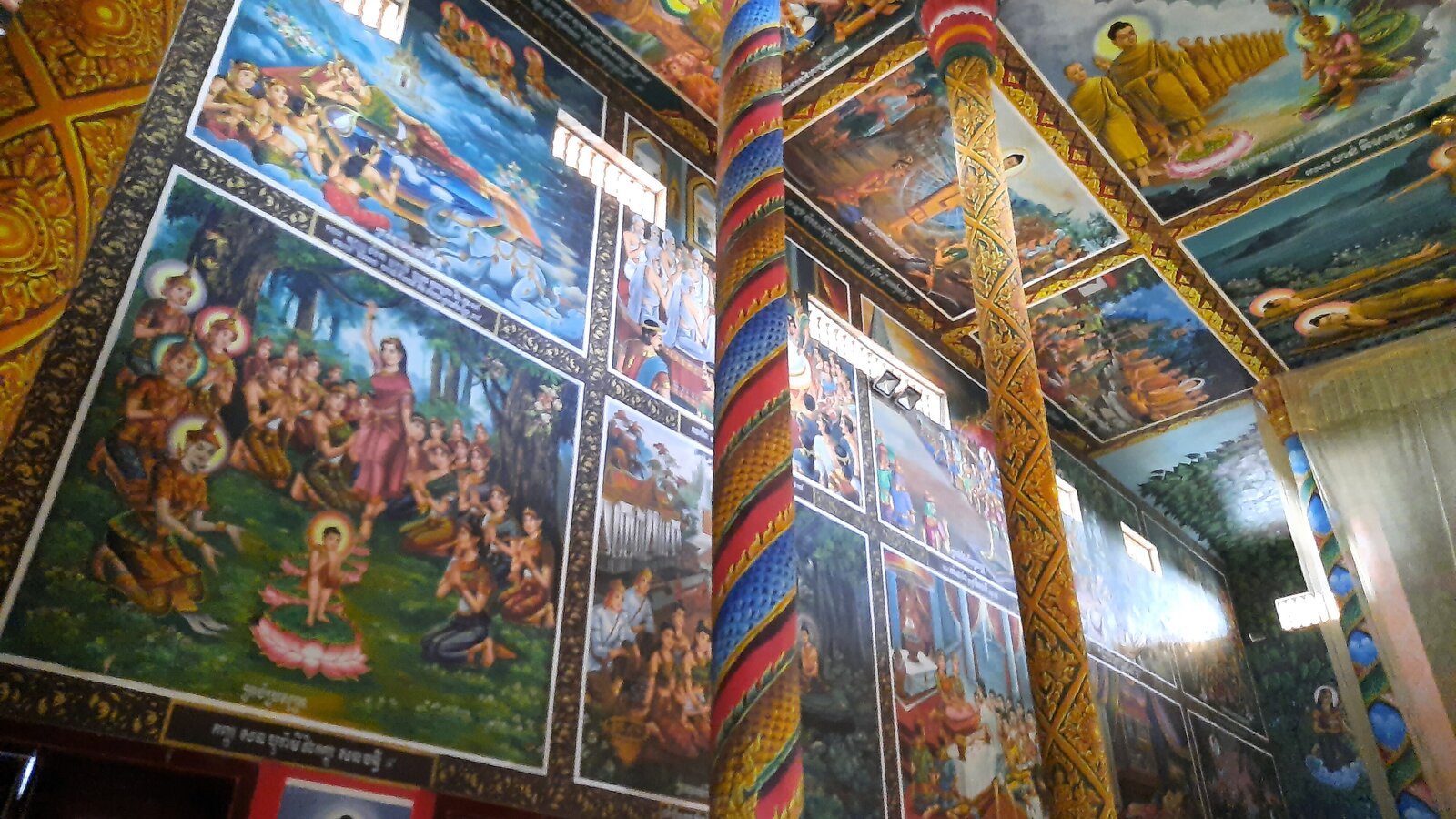
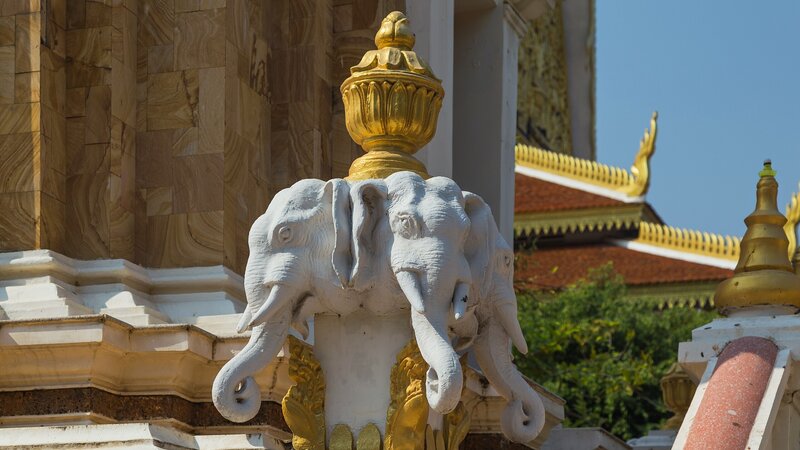
Photo above: Frescoes at Wat Reaksmey Sophoan, Kandal Province (by MAADS)
Silver Pagoda Link to Silver Pagoda section
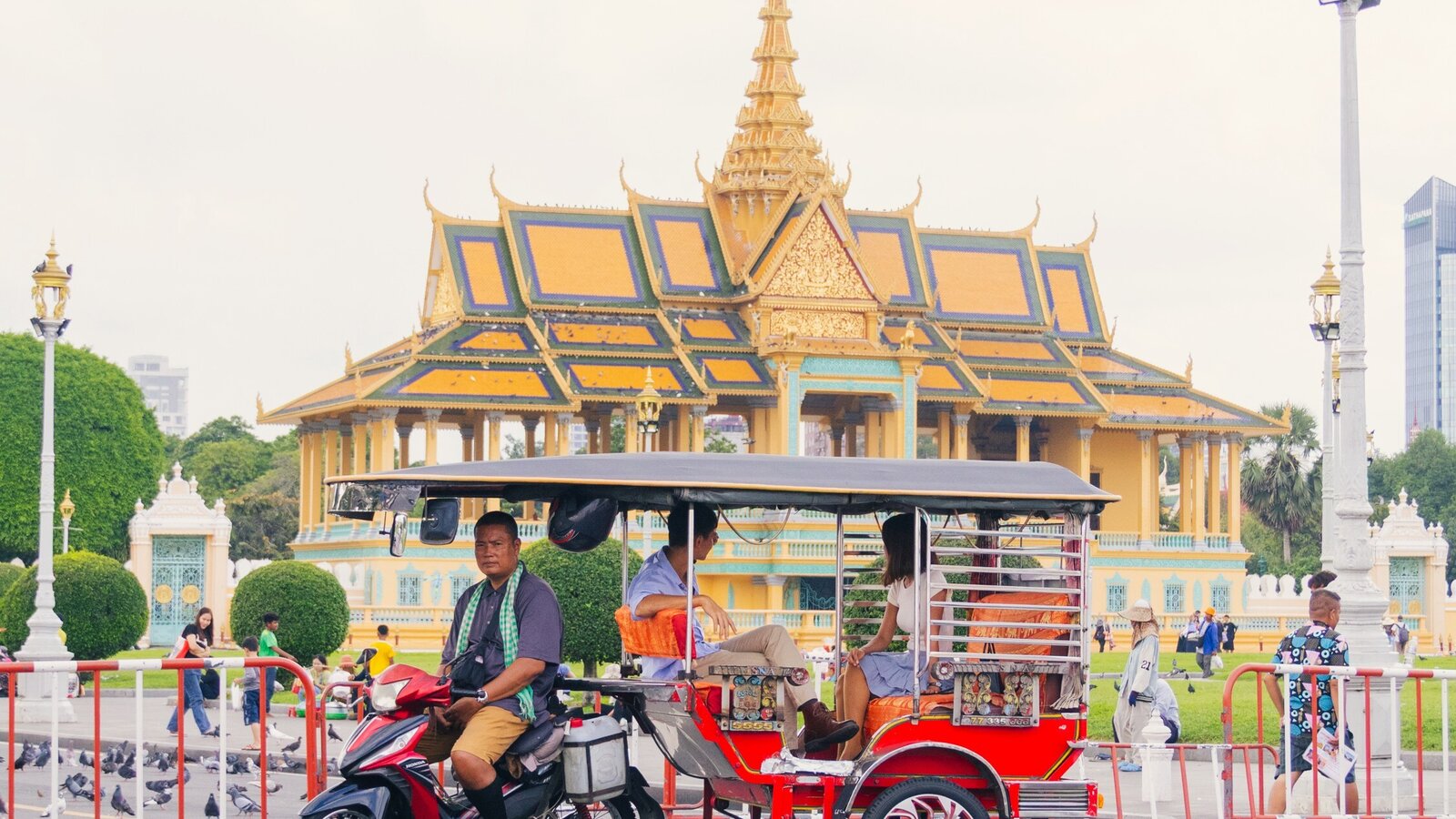
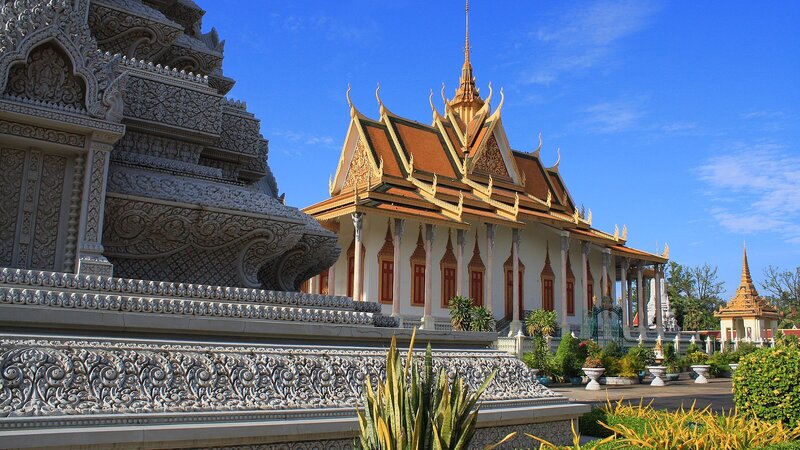
The Silver Pagoda, also known as Wat Preah Keo [វត្តព្រះកែវ, 'Temple of the Emerald Buddha'] houses national treasures, including sacred Buddha statues and intricate artworks.
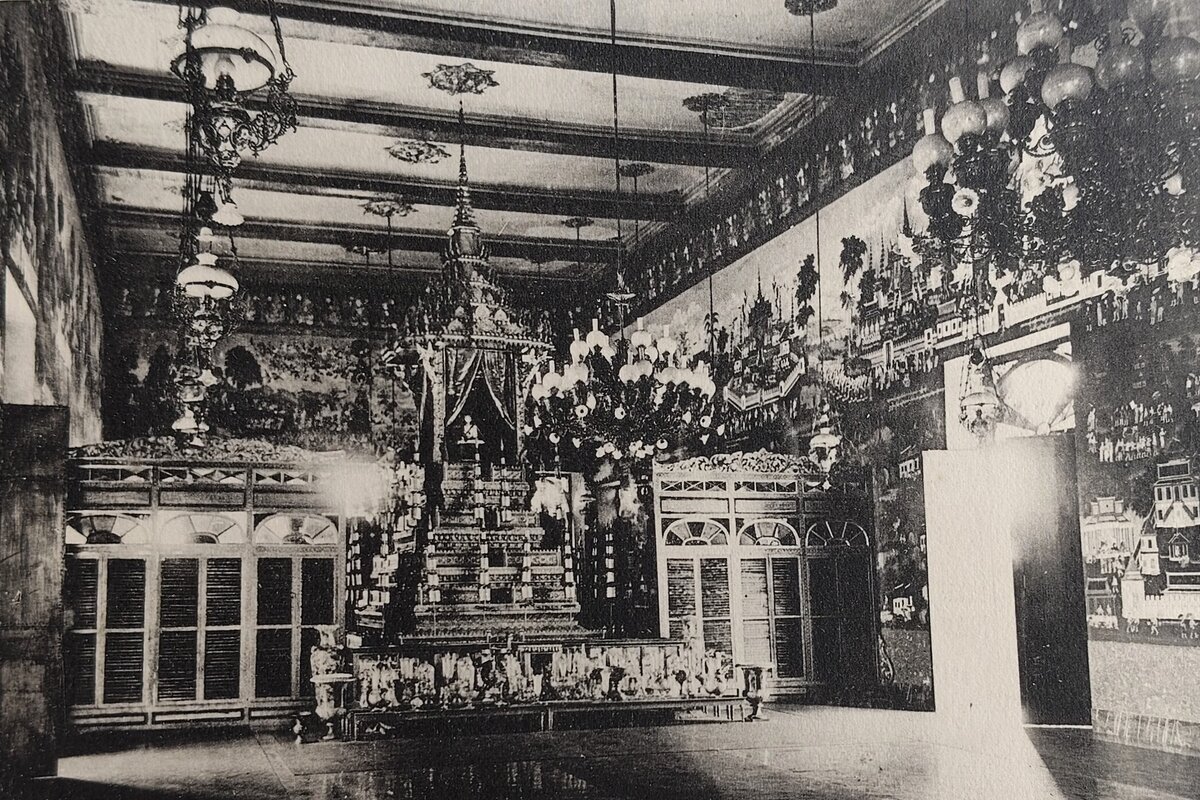
Magnificent mural paintings representing jataka scenes related to the birth and life of the Buddha were lost during restoration works [see photo below] but glass plate photographs capturing them in situ have been recently found and can be viewed at Sosoro Museum.
- 8am – 5pm
- Clothing that covers the shoulders and legs is required. Photos are not allowed inside the pagoda.
- 550 m from your hotel [7 min walk via Street 240 (Oknha Chhun)]
(photos via Flickr; MAADS)
below: Silver Pagoda, part of mural paintings, photo by P. Dieulefils, 1910, via Angkor Database.
Wat Langka Link to Wat Langka section
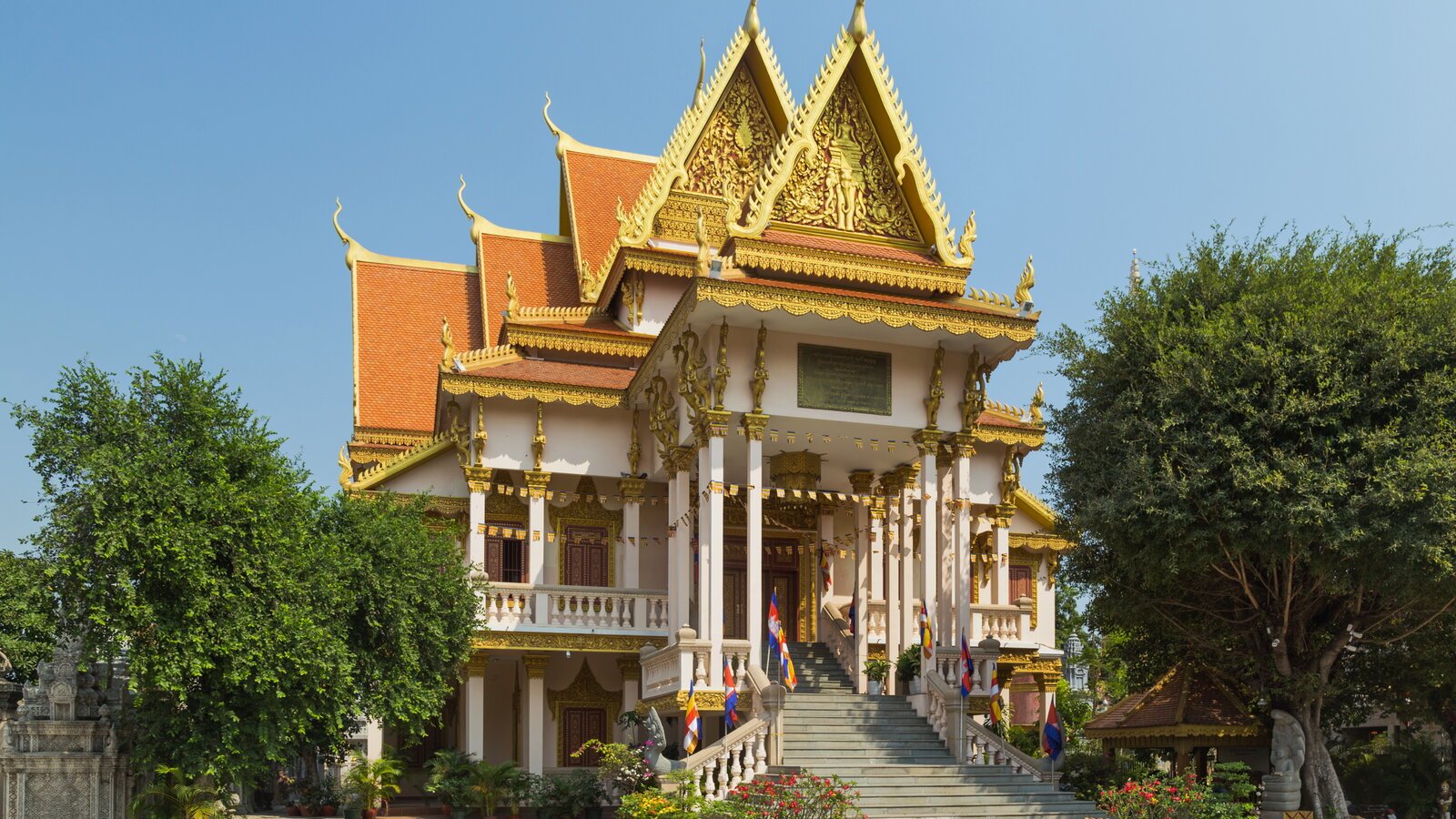
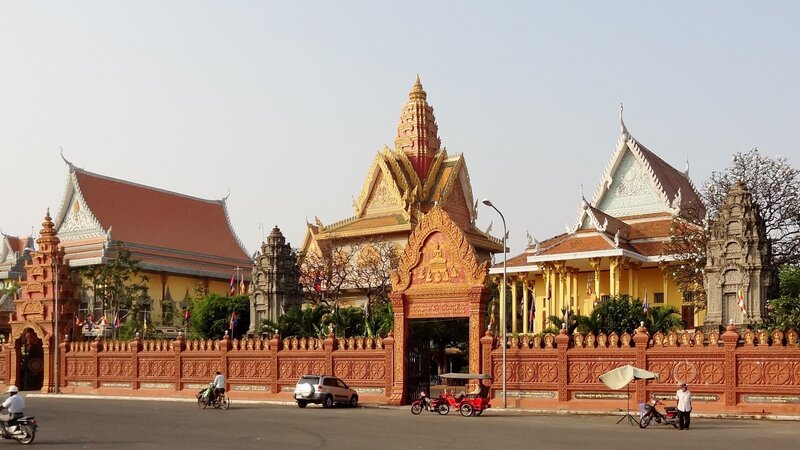
Among the city’s five oldest pagodas (founded in 1442, Buddhist Eara 1985), Wat Langka [also known as Wat Langka Preah Kossamaram, as Queen Kossamak used to pray and study there] offers a serene environment for reflection and spiritual insight, with public meditation sessions held on Monday, Thursday and Saturday mornings and evenings.
Wat Langka, initially named after the Sri Lanka monks who came to share their knowledge here, has peaceful grounds and beautifully adorned halls that make it a welcoming stop for visitors interested in Buddhist traditions. (photos by Marcin Konsek)
- Public access: 6am – 7pm
- 900 m from your hotel (16 min walk along West Independence Park)
Wat Botum Link to Wat Botum section
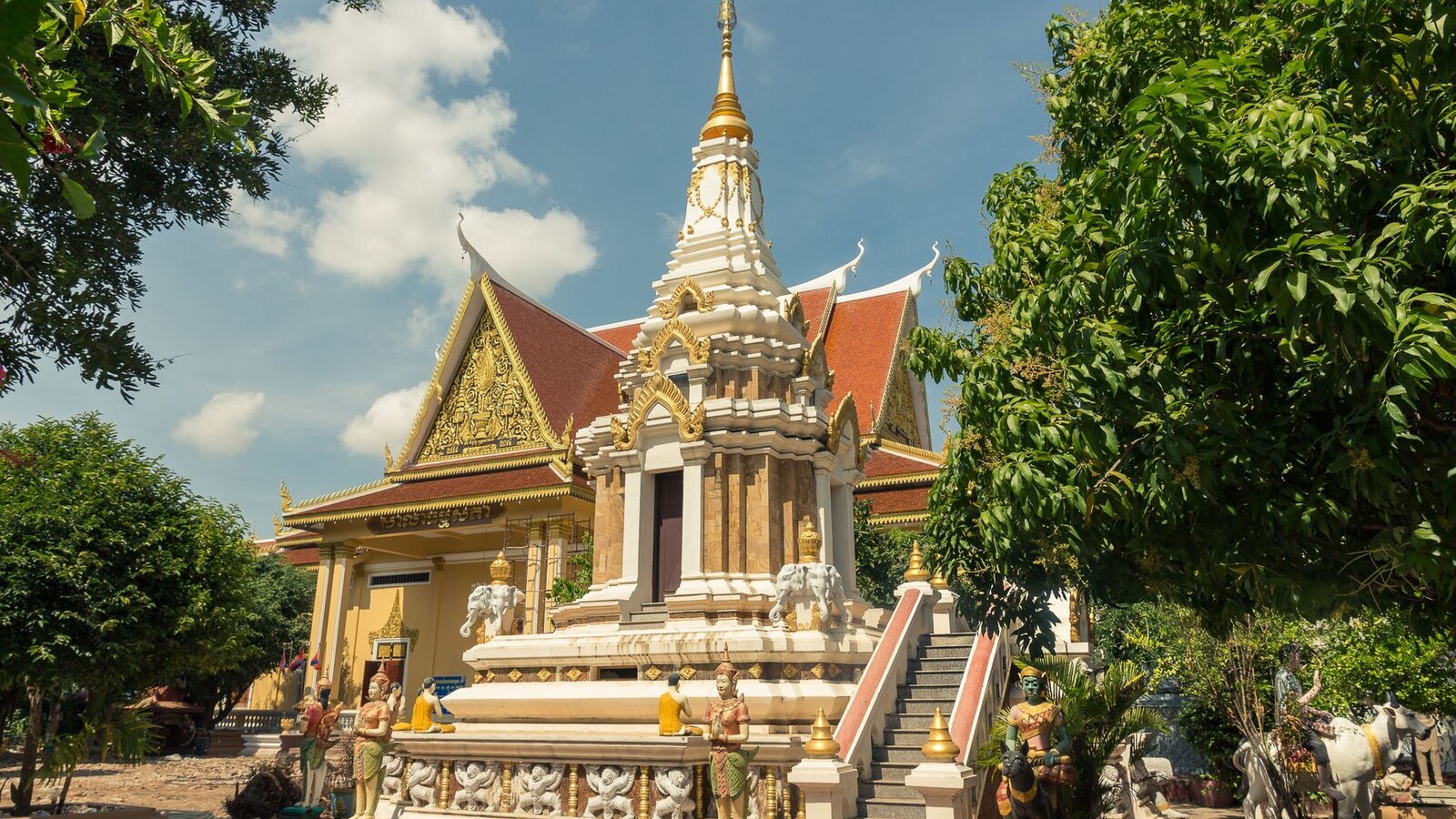
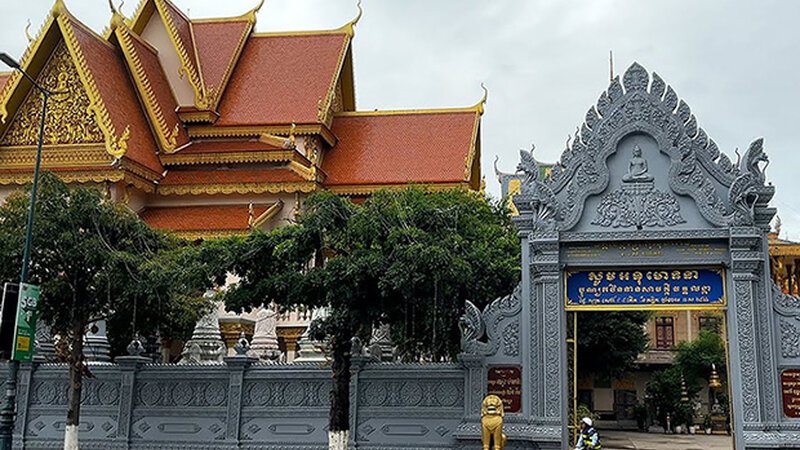
One of Phnom Penh’s six ancient royal pagodas (15h century), Wat Botum is closely linked to the early history of the city and the Cambodian monarchy.
It is said that the monastery was originally named after Khop Ta Yang, the owner of the land given to the King to build a temple surrounded by wells and ponds graced by lotus flowers (botum in Khmer). Abandoned, it was rebuilt by King Norodom when he moved his capital city from Oudong to Phnom Penh in 1865. The spiritual leaders of the Buddhist order close to the royal family resided and taught there.
Nowadays, its peaceful gardens, ornated stupas, and historic buildings offer a calm setting to reflect on traditions and the city’s past. (photos by Marcin Konsek; Dmitry Mottl)
- Public access: 7am – 6pm
- Entrance directly across the street from Pavilion.
Wat Ounalom Link to Wat Ounalom section
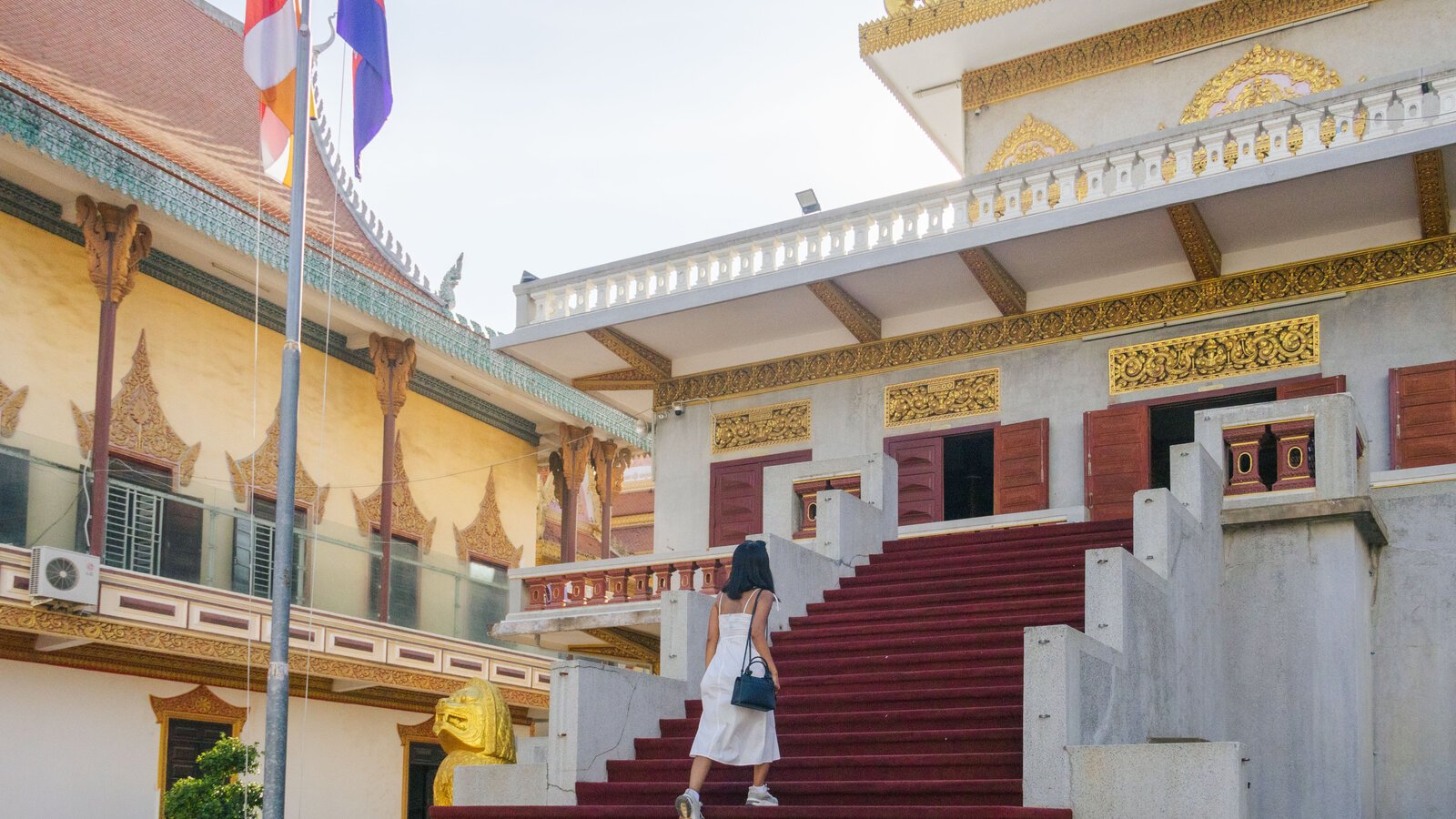
Recognized as the spiritual center of Cambodian Buddhism, Wat Ounalom plays a key role in religious study and monastic education.
The pagoda houses an important Buddhist library containing religious manuscripts and texts used for teaching and scholarly study, supporting monks and students from across the country.
Its historic shrines, courtyards, and active learning environment offer insight into the foundations of Buddhist practice and education in Cambodia. (photos by Olaf Tausch; MAADS)
- 7am – 6pm
- 1.4 km from your hotel (18 min walk along the National Museum)
Maha Panna Vihara Link to Maha Panna Vihara section
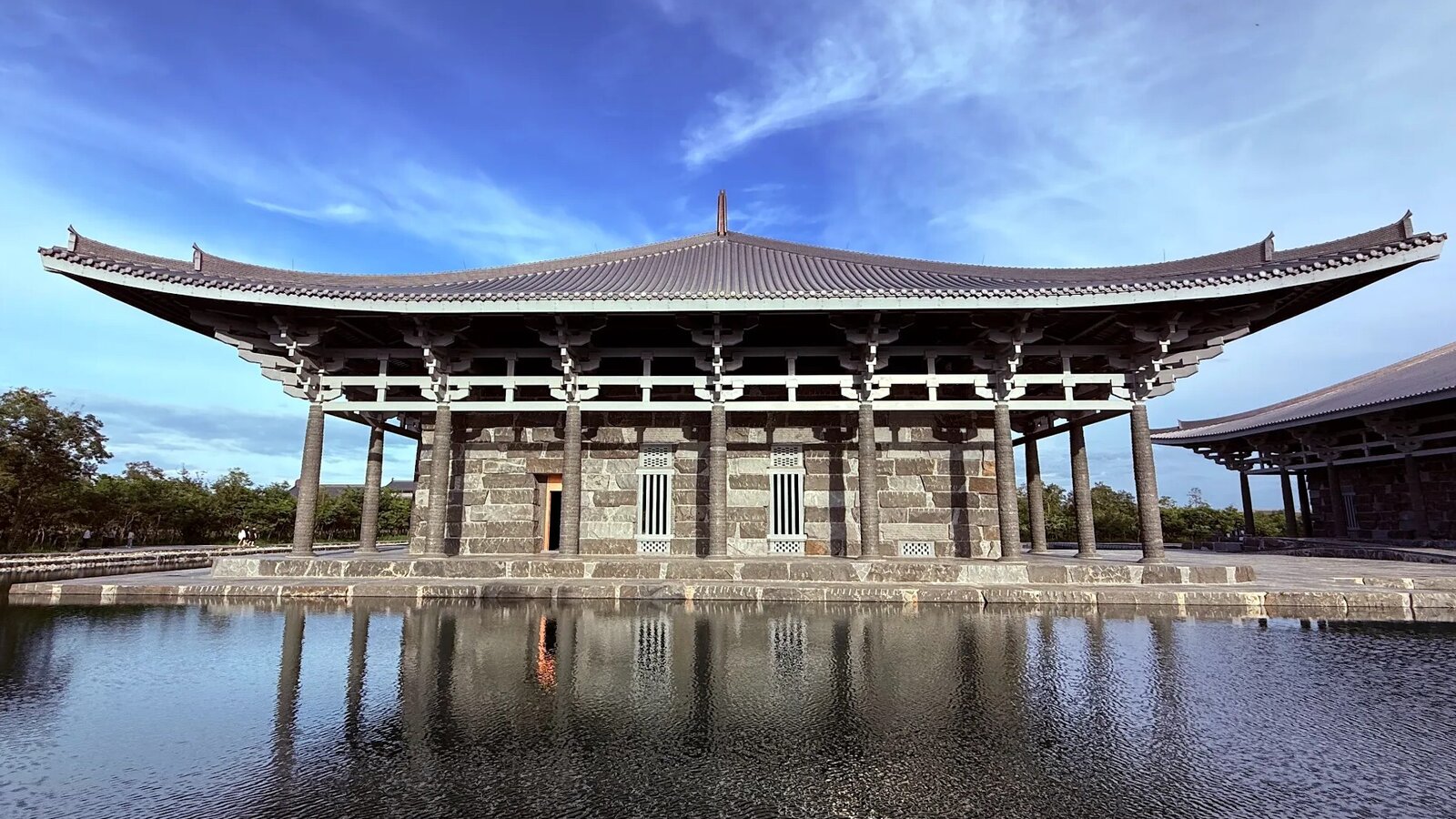
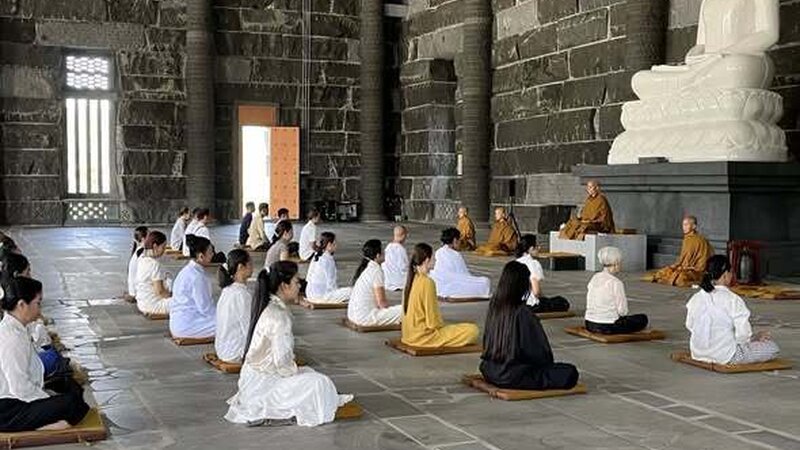
Maha Panna Vihara, also known as Wat Panha Thom វត្តបញ្ញាធំ (Monastery of the Great Wisdom) is a complex of shrines and halls among gardens and ponds surrounded by a grand enclosure wall made of of massive stone blocks.
Founded by the Maha Panna Bhikkunis (female monk) Sangha, a Buddhist organization originating from Taiwan, it is recognized as a Theravada Buddhist worship, education and meditation center.
Peaceful courtyards, water features, meditation halls, all concur to ensure a serene pause from the city's hustle and bustle. (photos by Maha Panna Vihara Foundation, Pov Vannchhai).
- 7am – 5pm
- 14.4 km from your hotel (36 min ride)