


Art, Artefacts and Antiques at Pavilion
As this collection's owner was working on the renovation of what would become Pavilion Oasis Heritage hotel in the early 2000s, it became obvious that these period houses nestled in the heart of historic Phnom Penh could be the dream setting for the array of art, artefacts and antiques we are briefly presenting here.
Something highly personal that also, somehow, softly speaks the universal language of aesthetic emotion.
Family heirloom, insolite items gleaned through travels and chance encounters, pieces reflecting the creativity of contemporary artists from Cambodia and elsewhere - there is no real 'theme' in this eclectic collection except that beauty can be found at home and along the capricious journey of a life line, until one reaches a space that, for so many reasons, truly feels like an oasis.
And so, let's start on this stroll through times, cultures and the peaceful expanse of Pavilion indoor.
[all photos by MAADS at Pavilion, Summer 2026 - unless otherwise stated]
Photographs from Afghanistan, 1930s Link to Photographs from Afghanistan, 1930s section
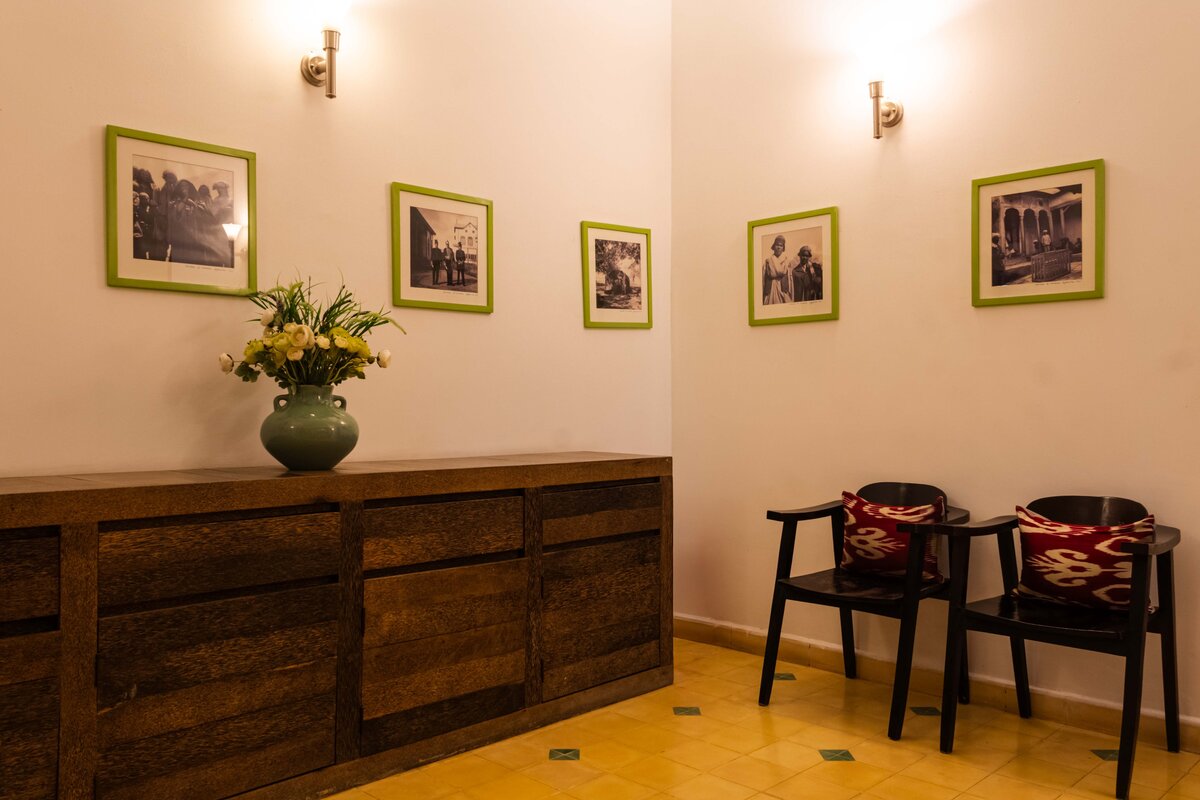
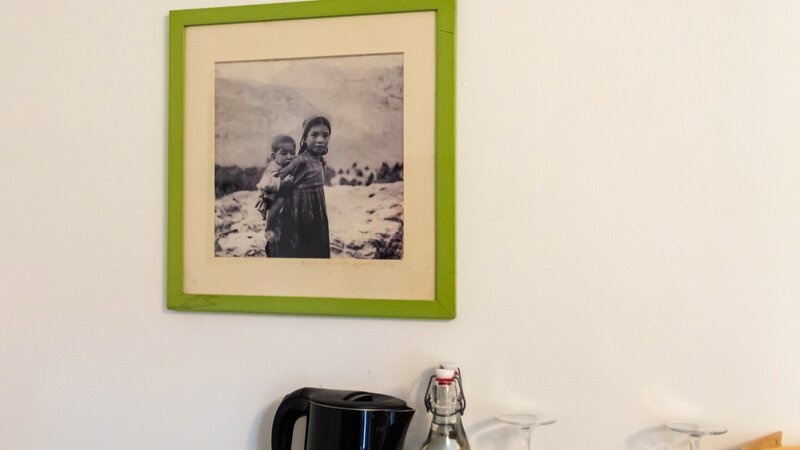
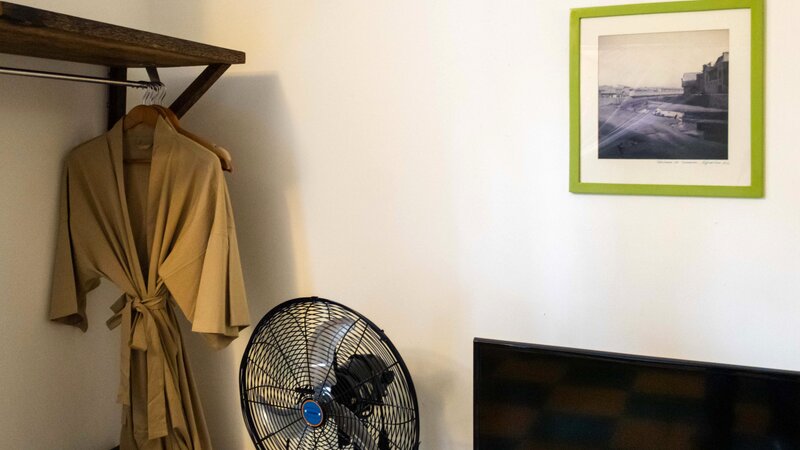
Tucked into several rooms are photographs taken in Afghanistan in 1928-1935 by Ghislaine de Suremain, the grandmother of the collection's owner, who explored the hilly country on horseback from the tender age of 16.
The daughter of a French diplomat, Ghislaine Marie Ida Eugénie Dollot (1912-2012) was a fearless teenager who roamed the Afghan steppes carrying one of the first produced Rolleicord 6×6 cameras [the legendary double-lens camera is still in production nowadays, in a highly sought-after digital version].
She married Henri Marie Jean De Suremain in 1939, and barely survived the looming World War II. As a widow, she became a teacher to feed her children and almost reached the centenarian threshold.
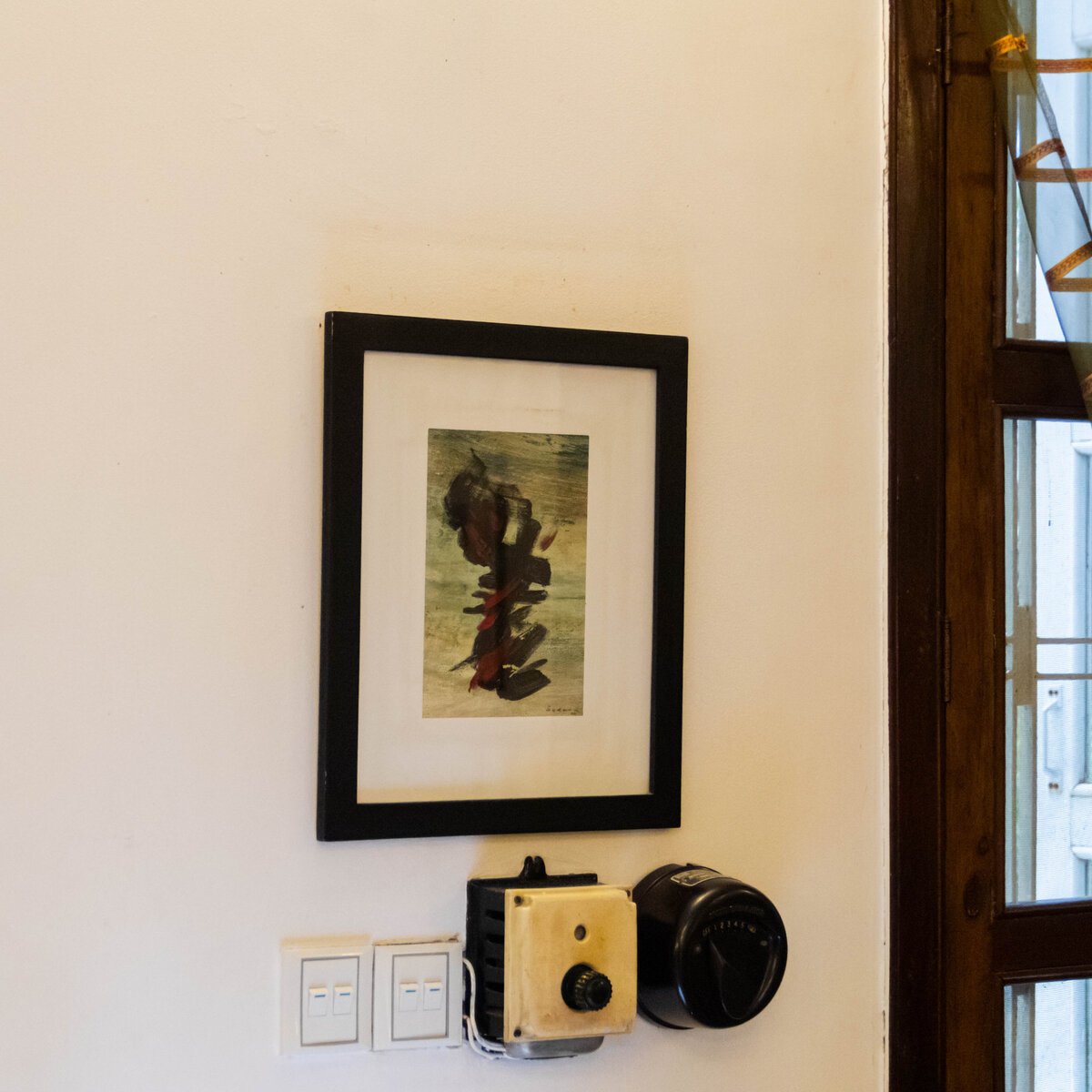
Paintings by Owner’s Mother Link to Paintings by Owner’s Mother section
These painting were created in Vilnius, Lithuania, and Paris, France, in the 1990s. Oil on paper.
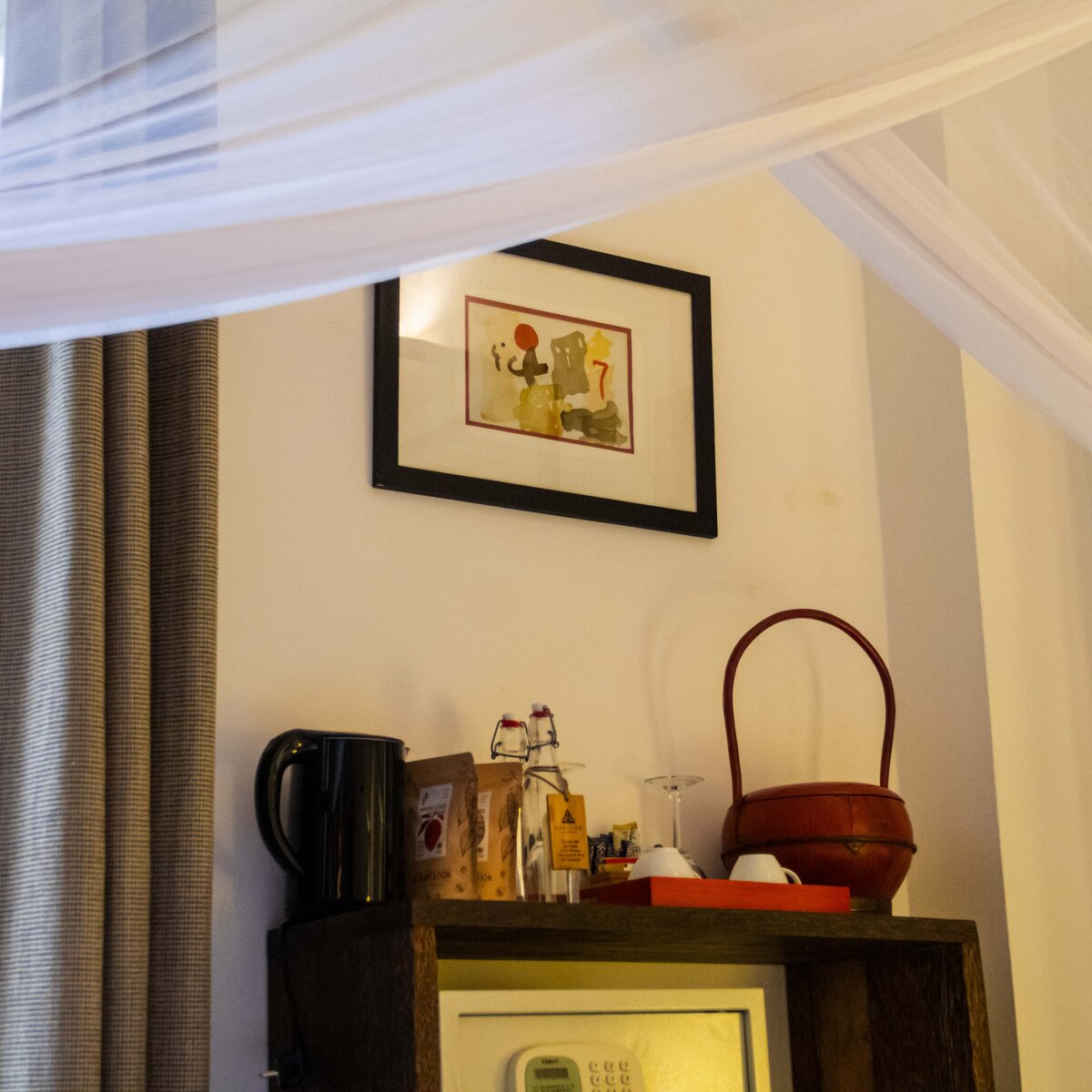
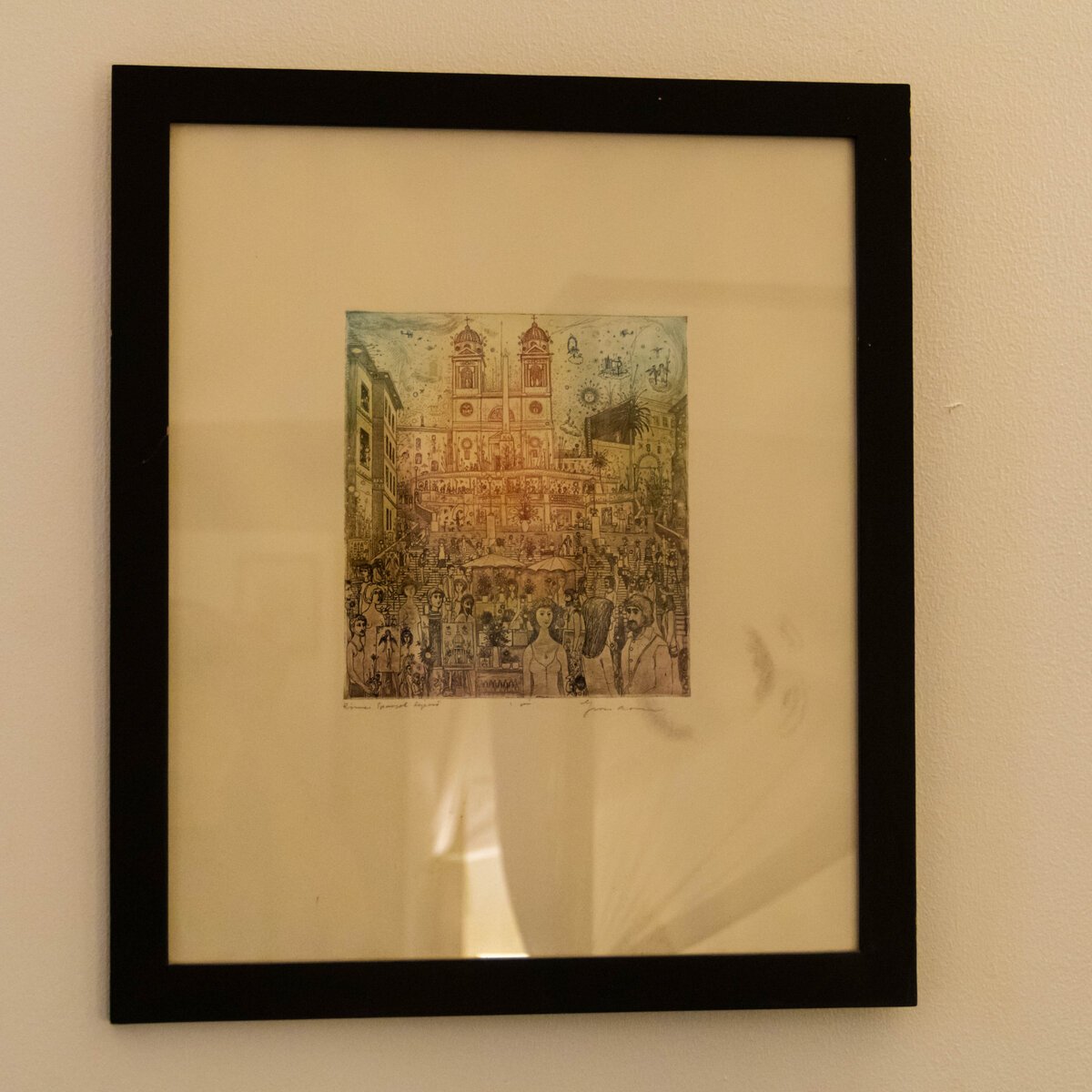
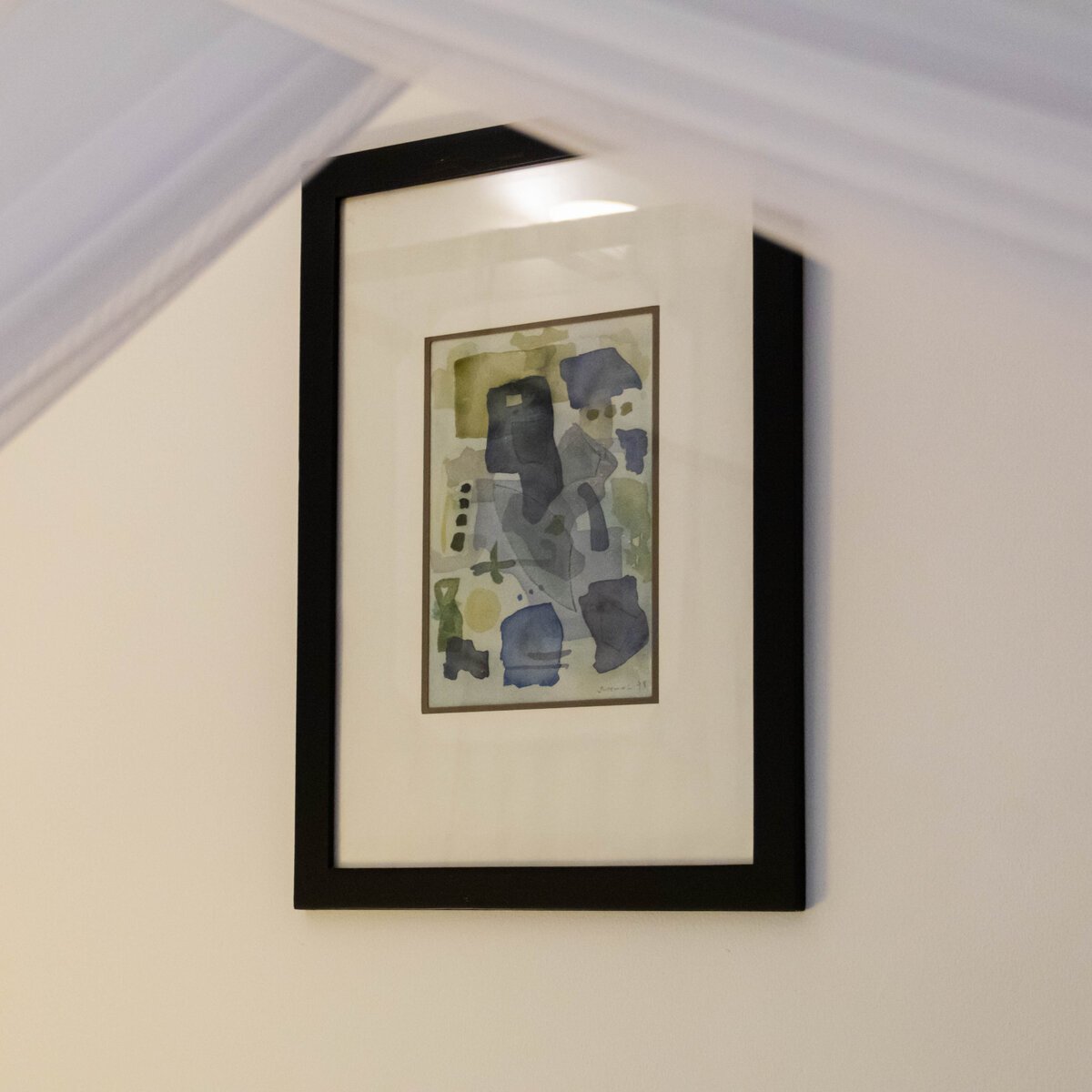
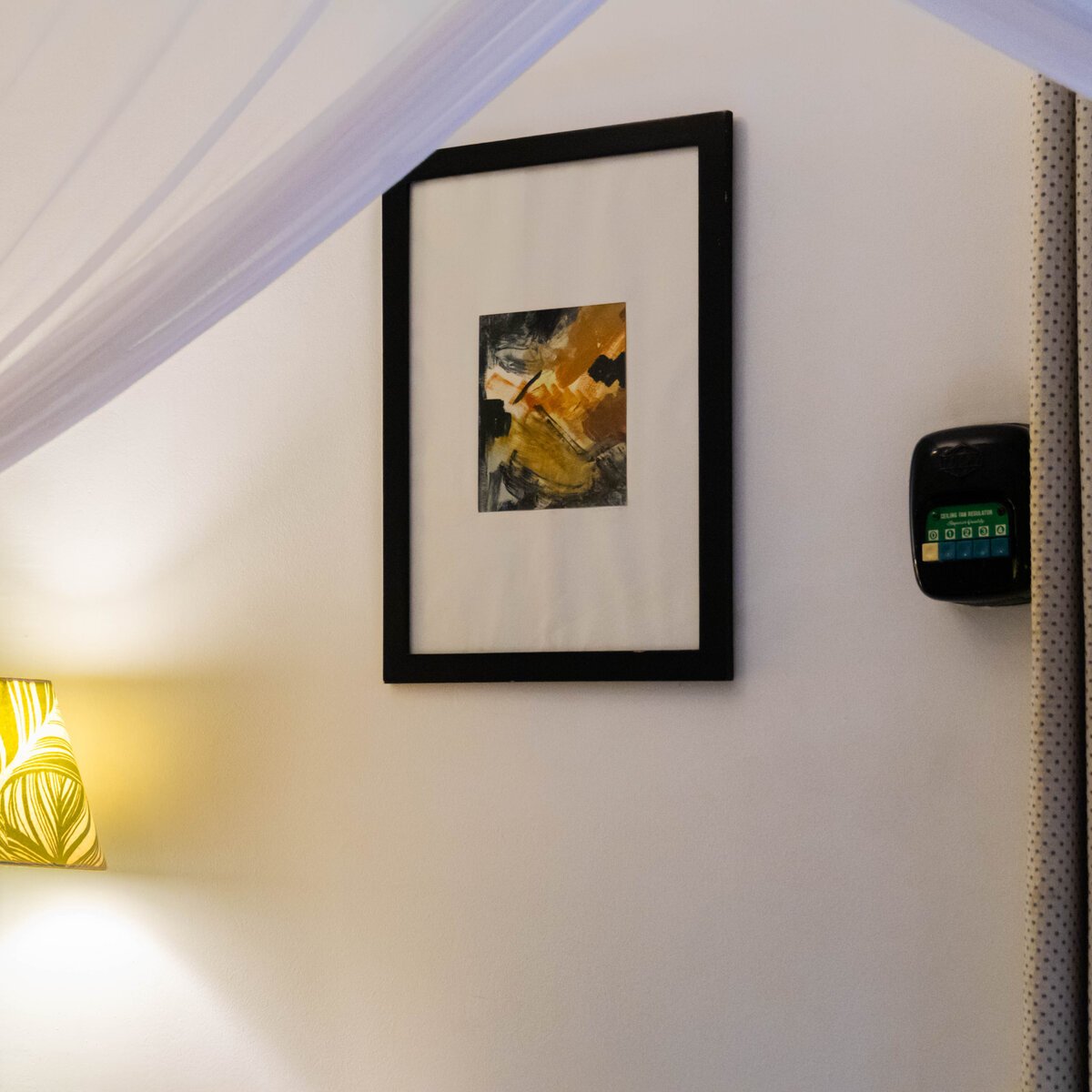
From Sothea Thang's Devatas series Link to From Sothea Thang's Devatas series section
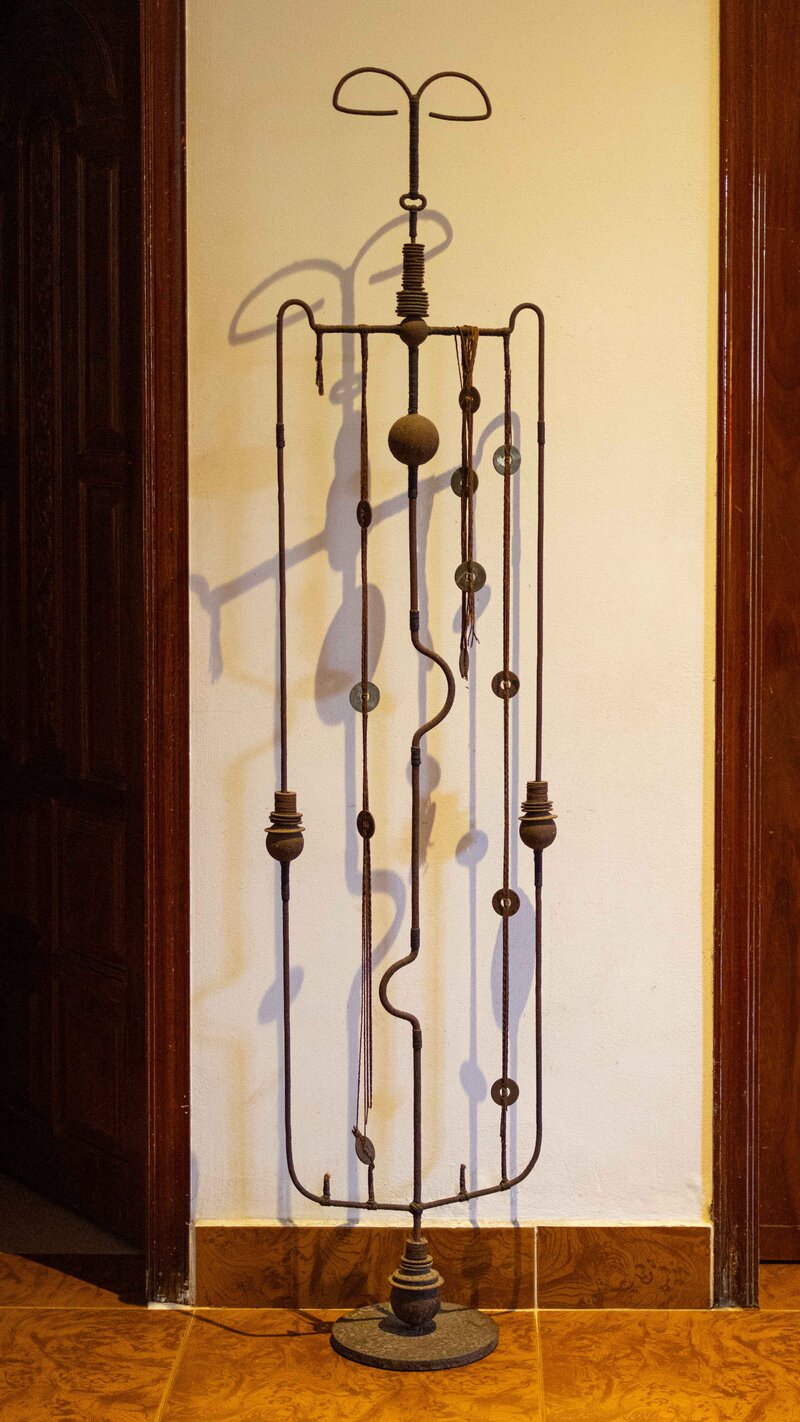
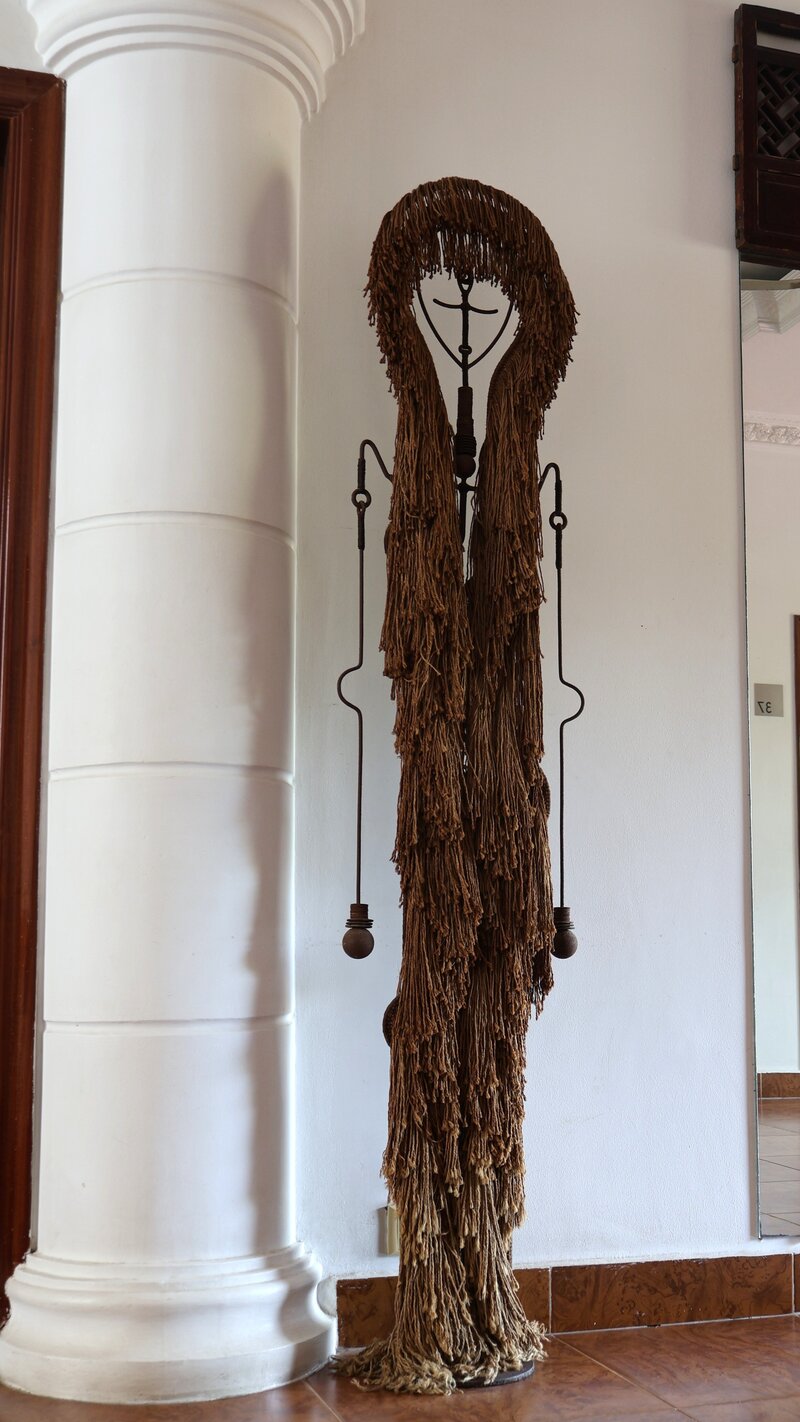
Sothea Thang ថាង សុទ្ធា (b. 1983, Kompong Cham Province) was still a budding visual artist when we remarked his work mixing modern and tribal moods in stunning sculptures using local materials such as natural hemp fibers, raw steel mesh and hand-forged iron rods.
It was duringh the exhibition Manu (from the word 'human' in Khmer) the collection owner initiated at the Lotus Pond Gallery, Plantation urban resort (Feb-March 2015) that we discovered his Devata ('Good Spirits') series, from which we purchased the two pieces pictured above. And we still remember the 35-meter long kite-dragon by Sothea we hung there across the patio.
Ten years later, Sothea is a leading Cambodian artist with numerous solo art shows under his belt, including one at Galerie Lee, Paris, (Oct. 2023) featuring The Keepers (Les Veilleurs), statues made of twisted sarong fabric on metal frame. His art is often shown at The Gallerist, a few steps around the corner from Pavilion, and took the front stage at Phnom Penh Contemporary art fair, 1st edition (Nov. 2026.]
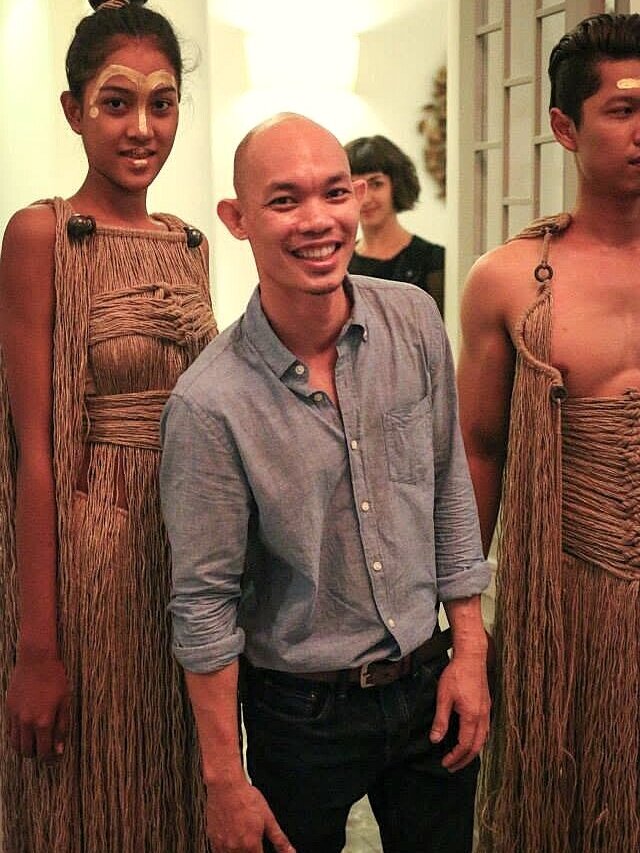
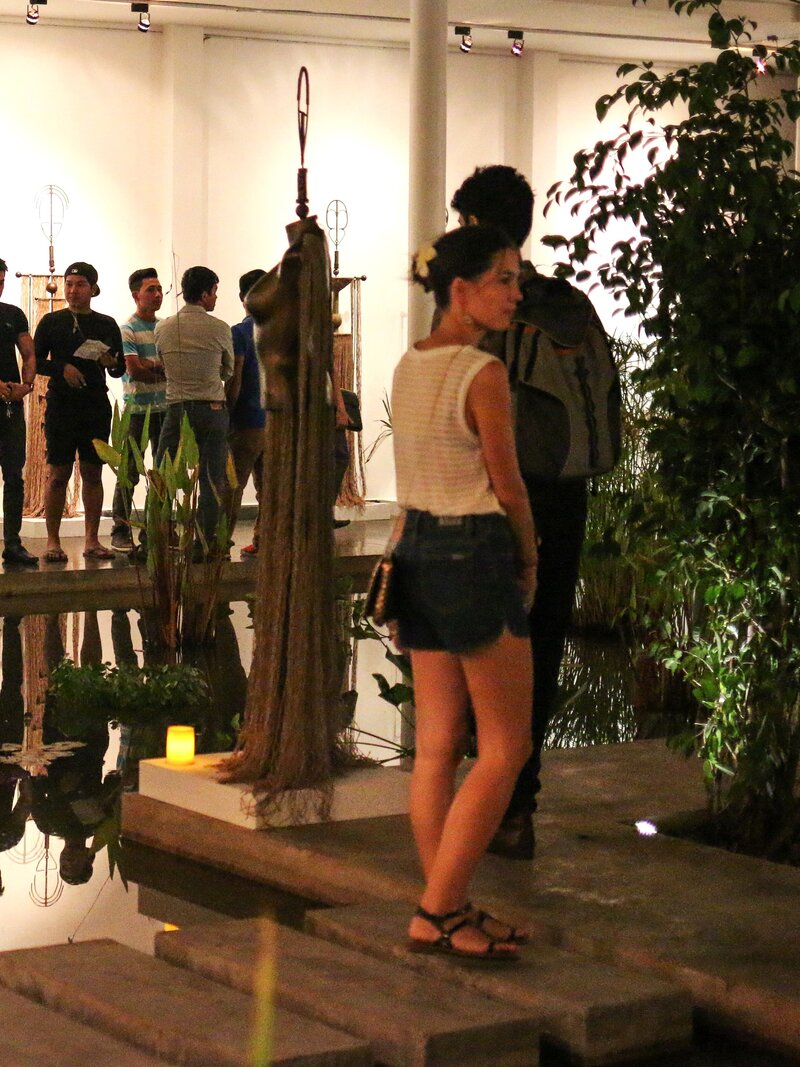
Below: Sothea and two models sporting his designs, and viewers around the statue 'Elle' at Manu exhibition, 2015.
Three Works by Attasit Pokpong Link to Three Works by Attasit Pokpong section
At Pavilion
At Pavilion
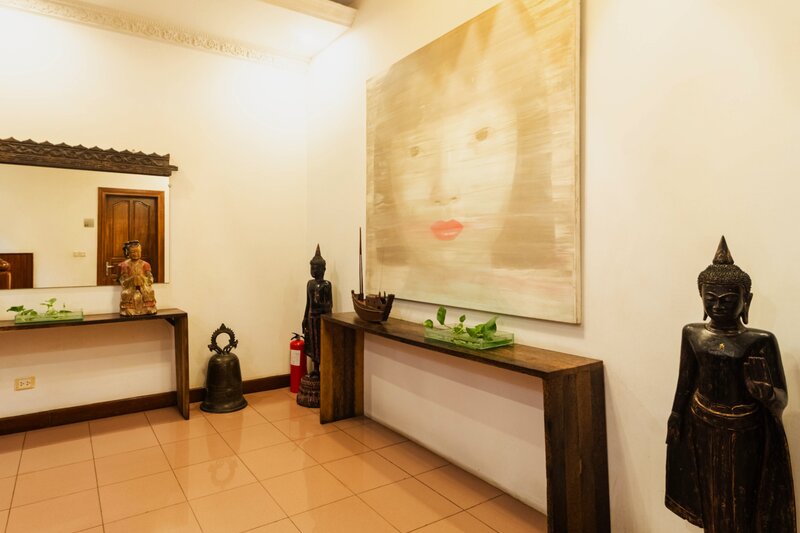
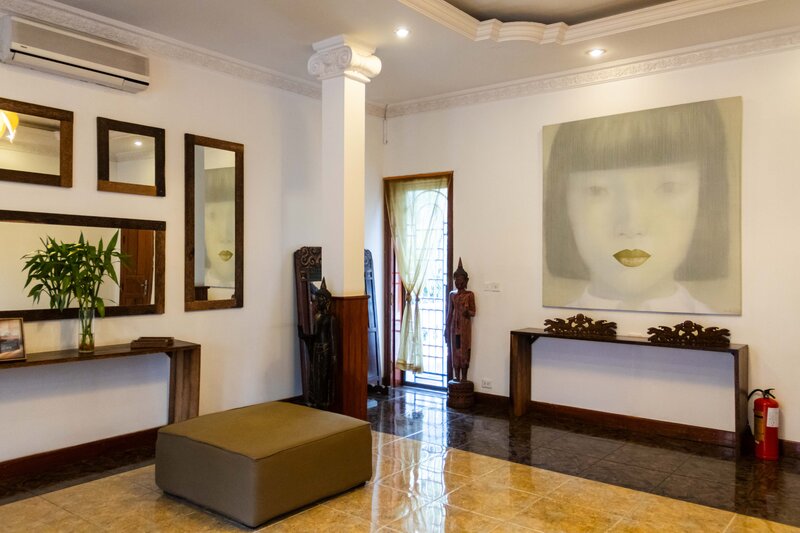
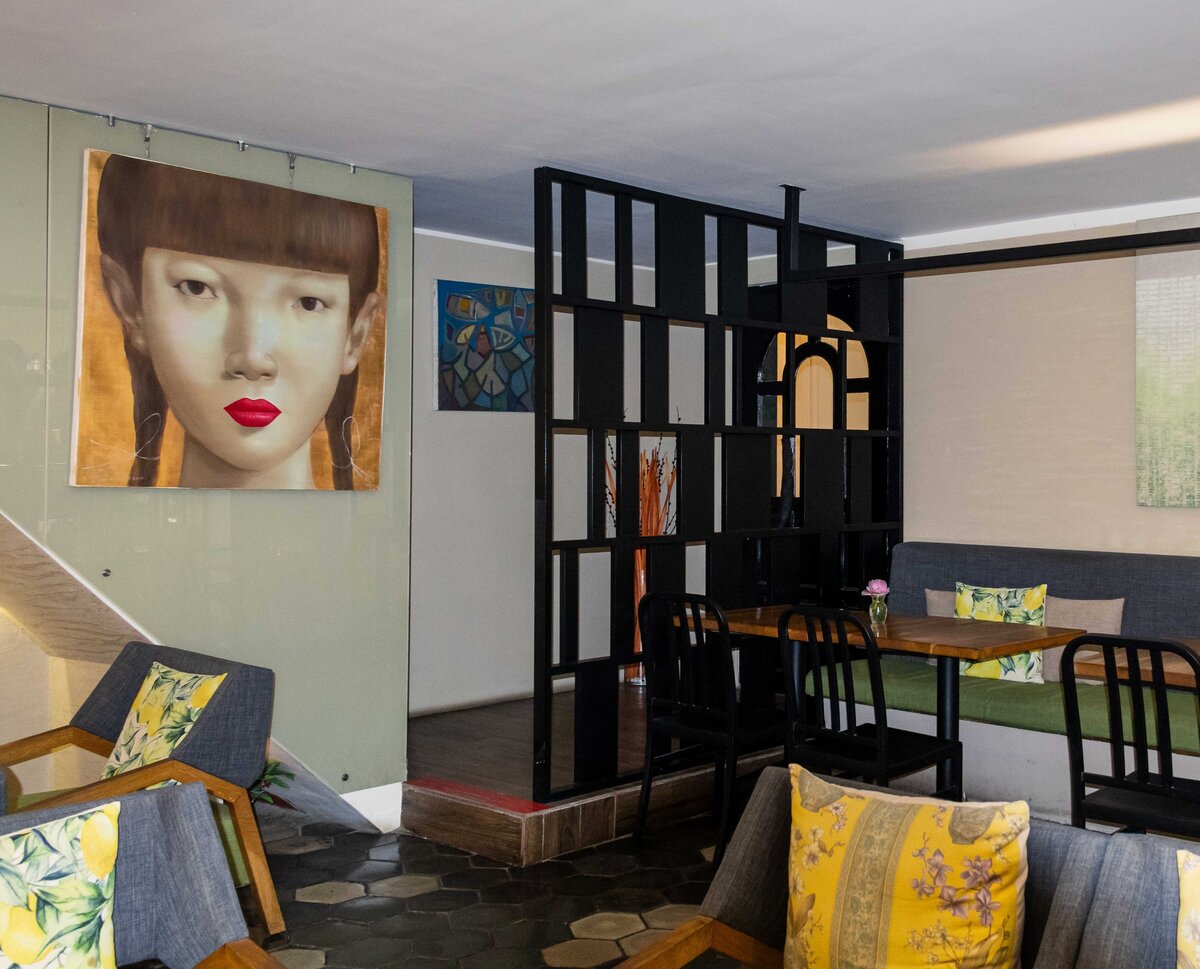
Attasit Pokpong (b. 1977, Thailand) made his Cambodian debut with his solo exhibition Lady Story (2009) at the riverside lounge Chinese House, a Phnom Penh venue then operated by MAADS which closed its doors in 2021.
Just before the Covid pandemic, Attasit was back to Phnom Penh for a 3-month exhibition (Dec. 2019-Feb. 2021, again at the Lotus Pond Gallery. His large close-up portraits of Asian women, boldly done in oil and acrylic, expanded the artistic vision of feminine inner strength he had developed in watercolor. As always, these delicately enigmatic female faces with vividly colored lips were inspired by his forever muse, Wallaya Rattanapirom, his wife of many years.
Note: Two of these three paintings can be seen at Pavilion (above), one at White Mansion Café (below).
At White Mansion
Russian Abstract Art Link to Russian Abstract Art section
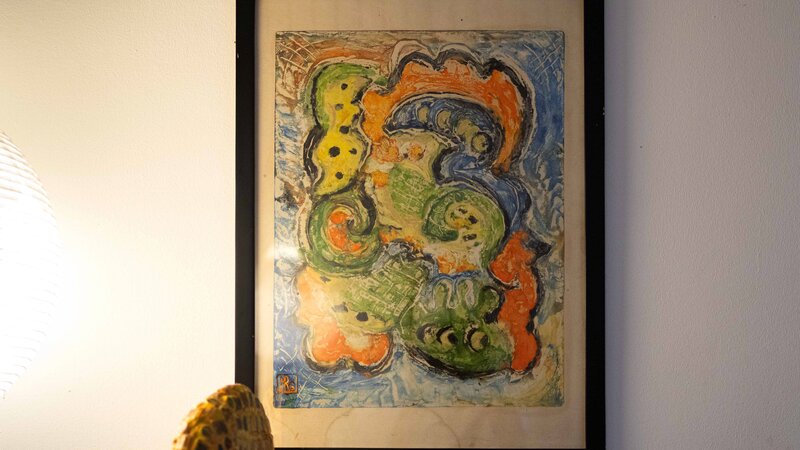
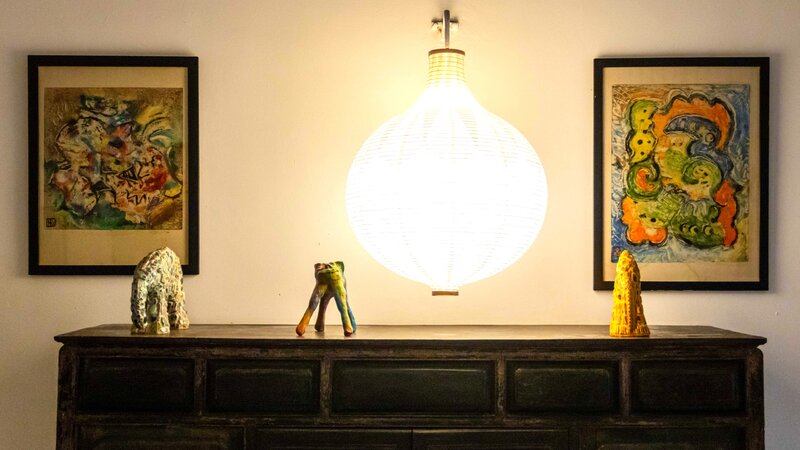
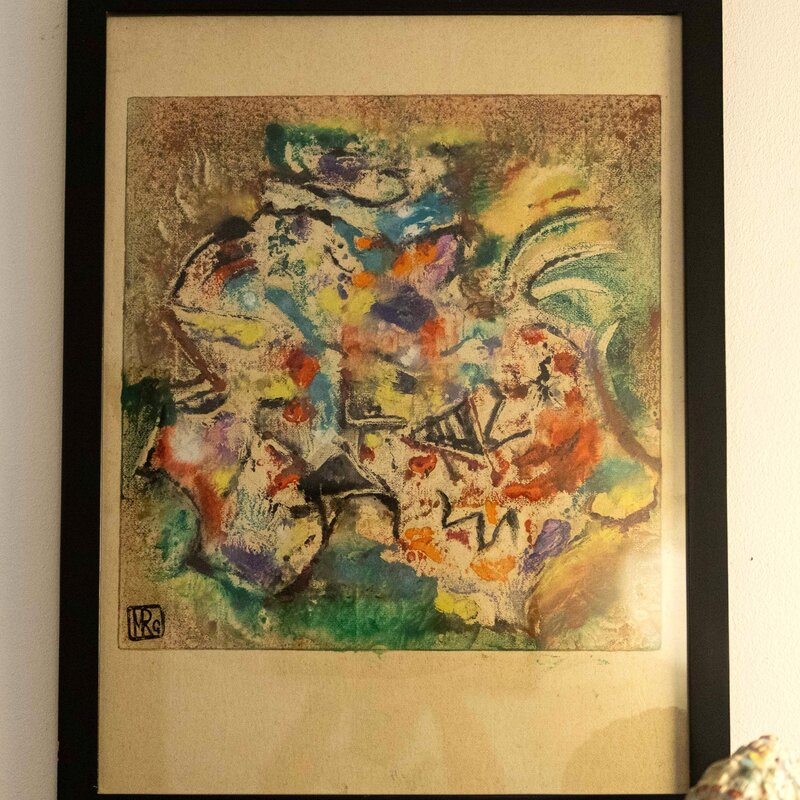
To someone like the collection owner who lived and worked in Russia several years, the powerful output of Moscow artist Maria Vyacheslavovna Raube-Gorchilina (1900–1979) spoke volumes. Mixing naive and abstract art, her work, reflecting more than half a century of Soviet avant-gardism, is still the subject of retrospectives in contemporary Moscow, while her paintings are often auctioned.
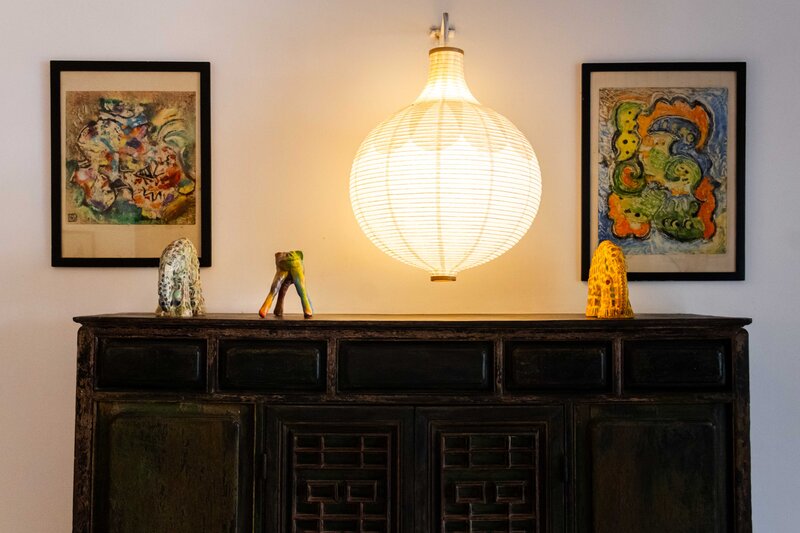
These two Maria V. Raube-Gorchilina's artworks were part of her Abstract Series developed in the 1960s [monotypes on paper].
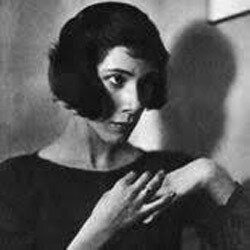
Also pictured below, a photo portrait of the artist in the 1930s [via Russkyi-Peyzaj.ru].
Contemporary Artworks from Bangkok Link to Contemporary Artworks from Bangkok section
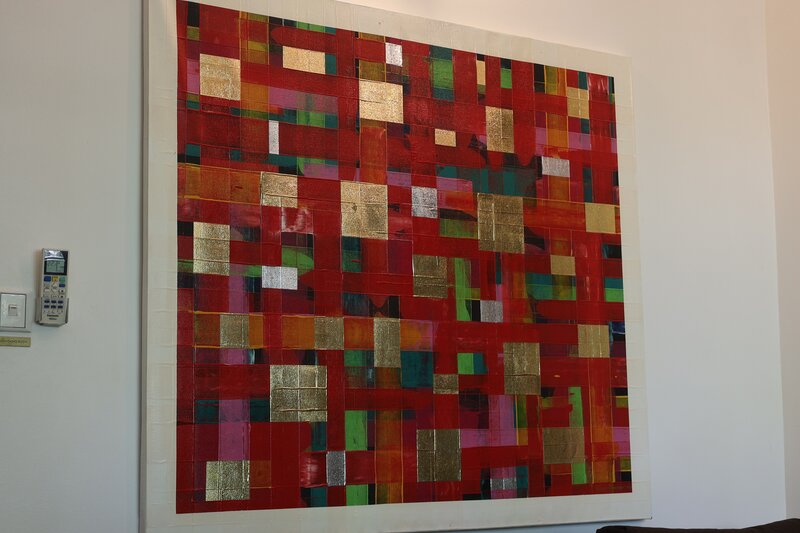
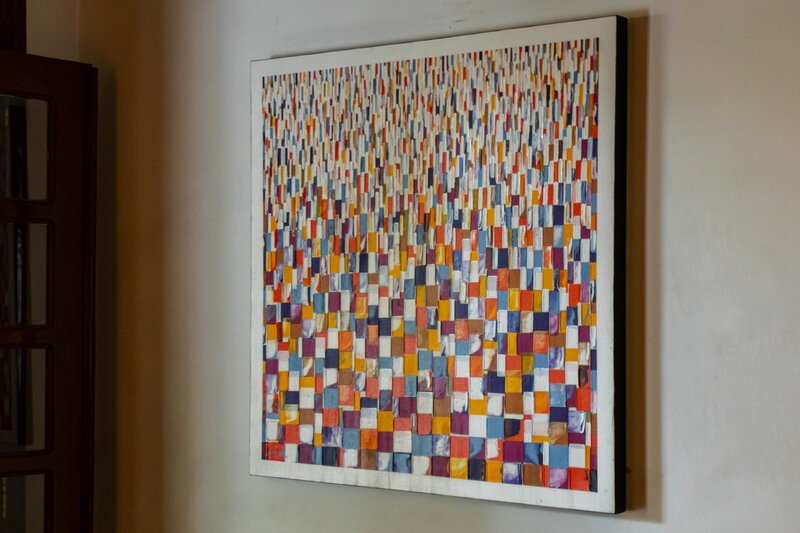
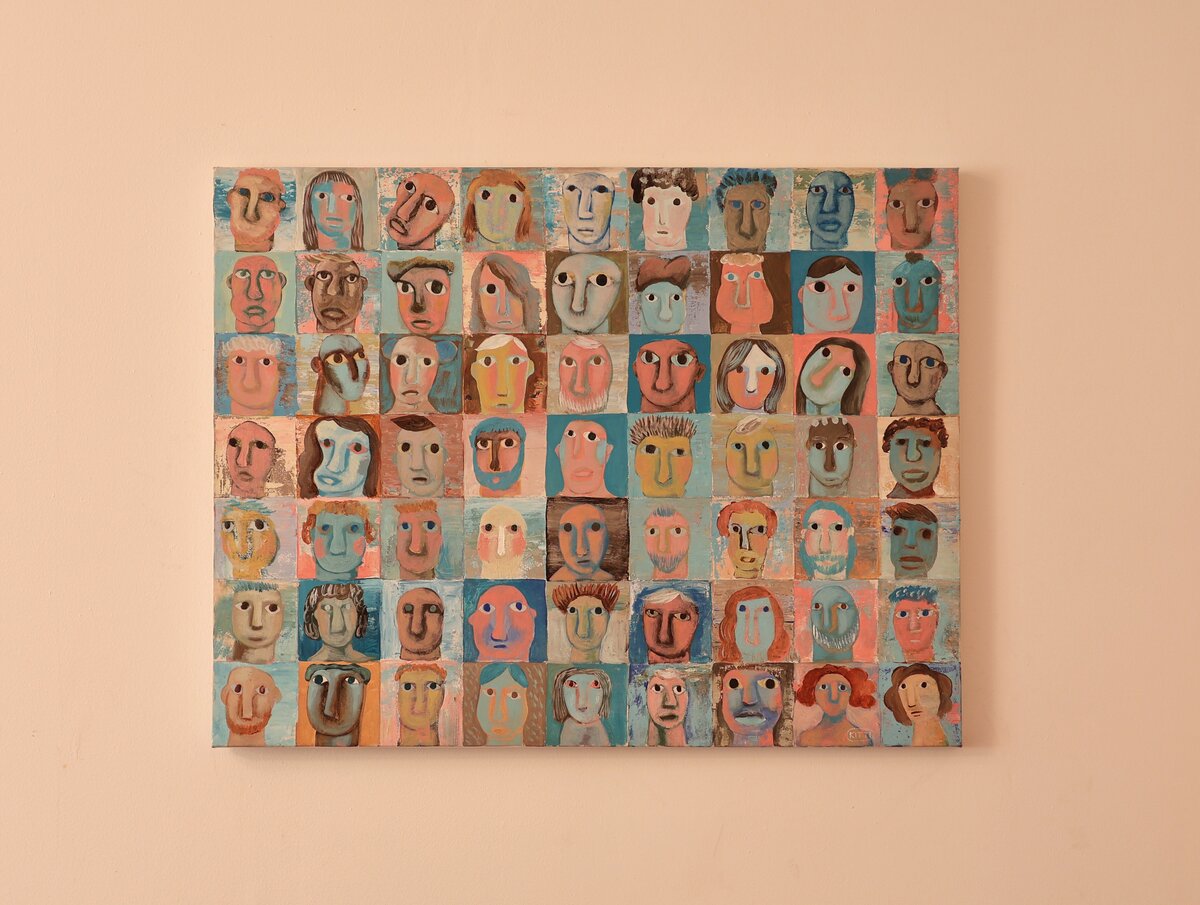
During one of his trips to Bangkok, the painting below by Kitti Narod (b. 1976, Thailand) caught the collection owner's eye [acrylic on canvas]. This noted artist has been regularly featured on the international scene, in particular with “The Pool by The Pool,” a 2025 exhibition at X Museum, Shanghai, China.
While the other two paintings displayed at Pavilion were also found in Bangkok and evoked a similar style, so far it hasn't been possible to find who authored them. Clues and suggestions are welcome.
Sculpted Wildlife Link to Sculpted Wildlife section
2 sets of animal sculptures
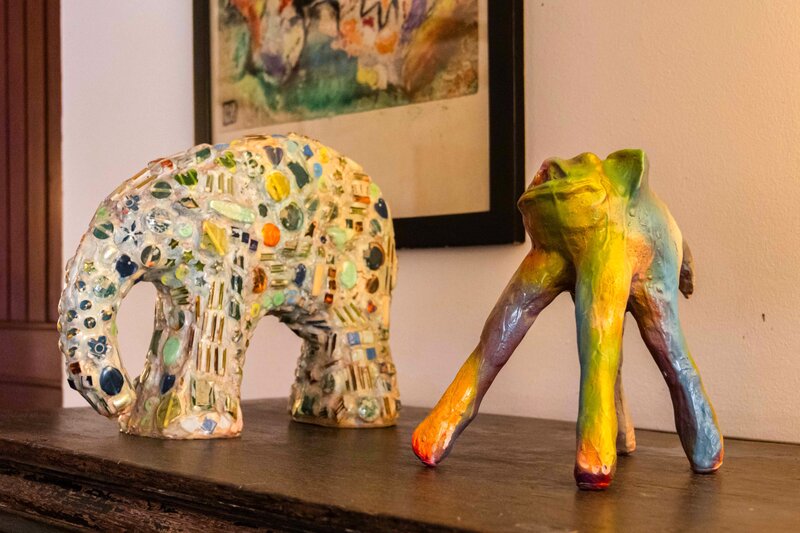
Above:
Three animal-themed sculptures
by an Australian artist based in Bangkok. Incrusted ceramic [cabinet-top display].
Below:
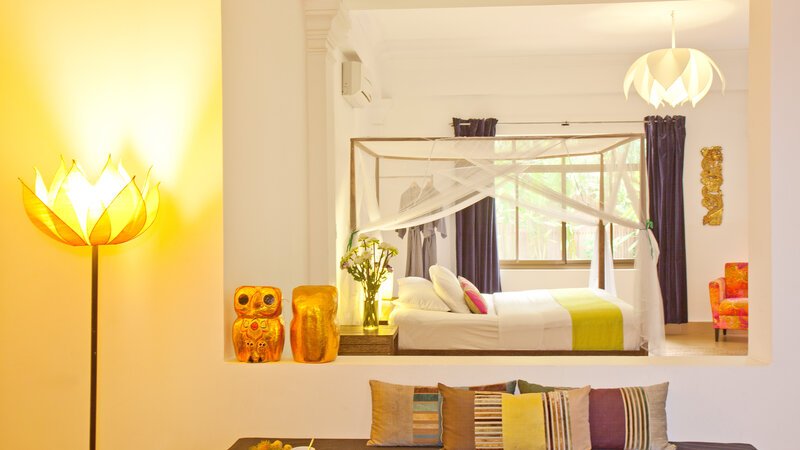
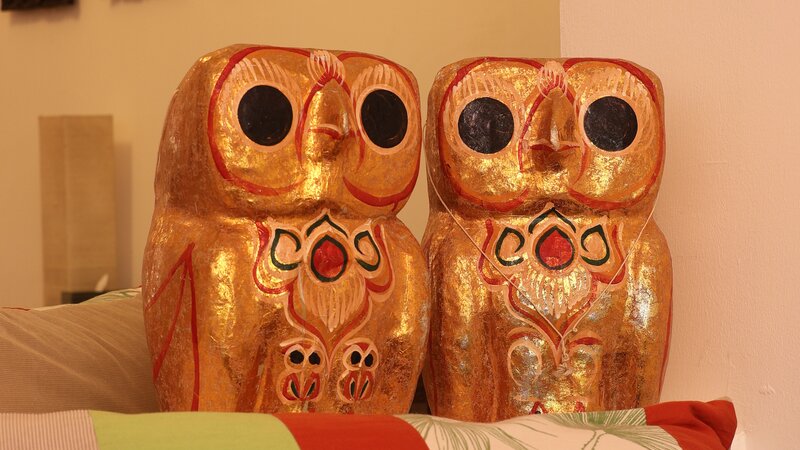
Burmese Paper-Mache Lucky Charm owls
A lucky charm owl family from Myanmar, featuring a pair of owls with two young ones. Look closely at the mother owl and the two babies can be seen tucked against her belly, believed for bringing good luck.
Paper mache [from French papier-mâché, lit. 'chewed paper] is a versatile craft technique using waste paper shredded and mixed with water and a binder. Popular across Southeast Asia since early 20th century.
Chanachai Tongloon (YAO) Link to Chanachai Tongloon (YAO) section
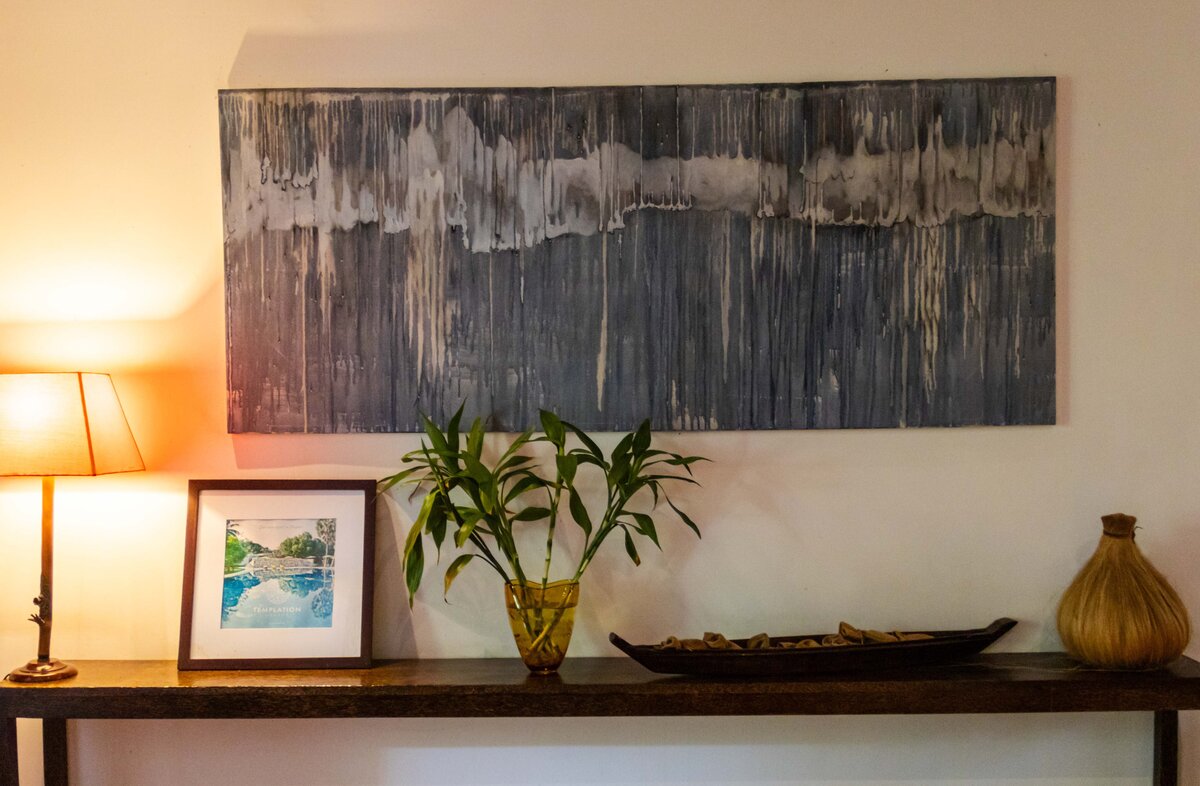
Chanachai Tongloon, also known as Yao, held an exhibition of paintings and sculptures in Phnom Penh titled 'For the Love of Human Figures' (2015). It was there, at Samai Distilleries, that the collection's owner bought this piece. Acrylic & Oil on canvas, autographed at the back.
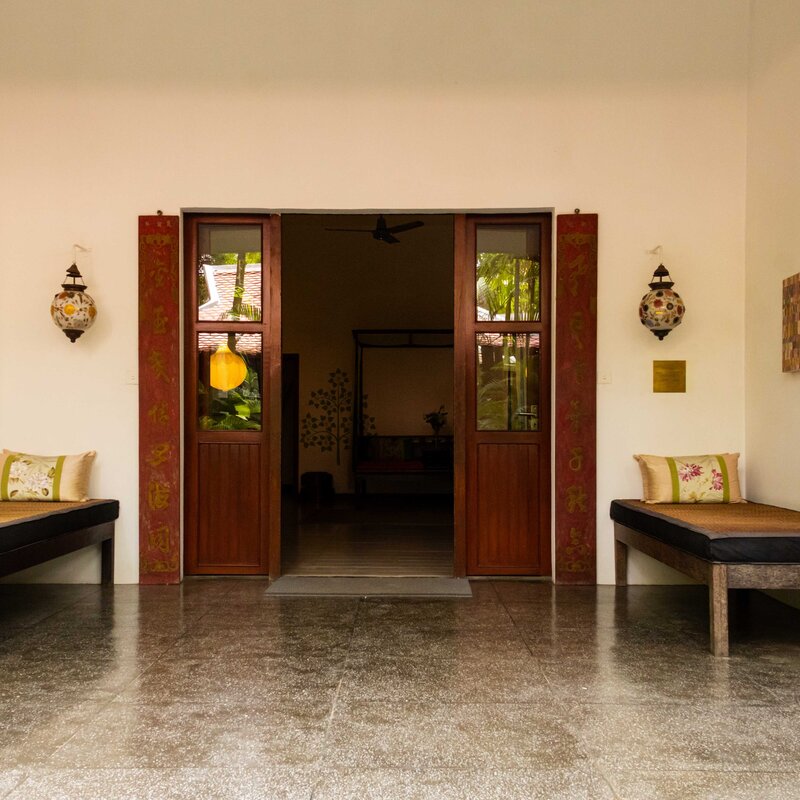
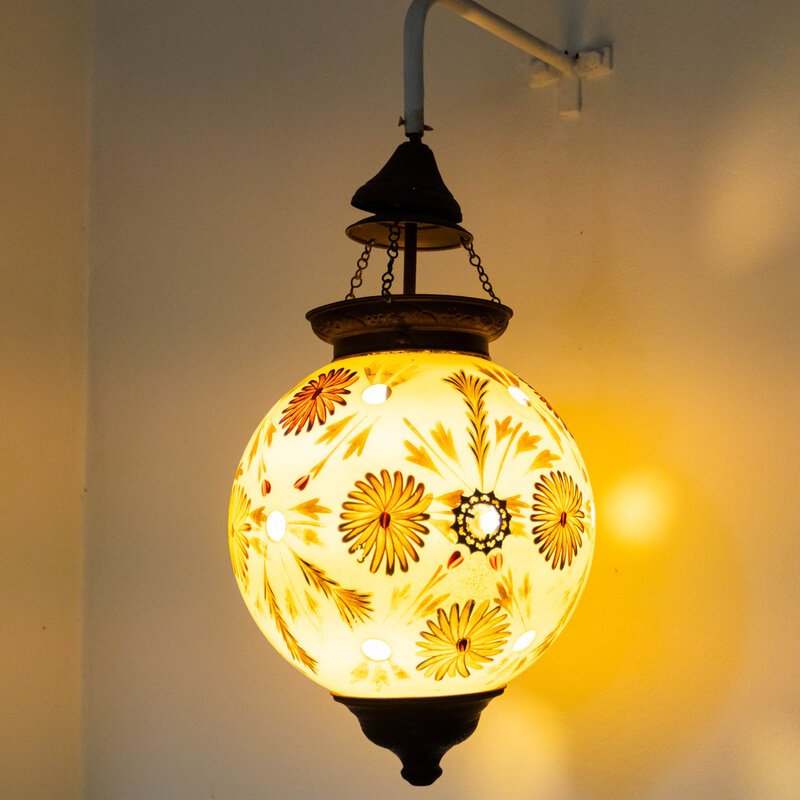
Hand-Painted Mosaic Lanterns Link to Hand-Painted Mosaic Lanterns section
Origin: India. Noiw hanging as wall lights in one Pavilion suite.
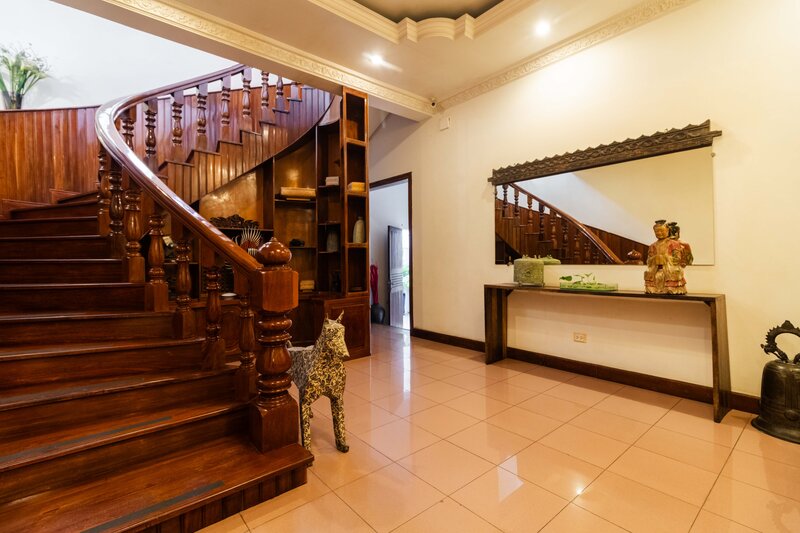
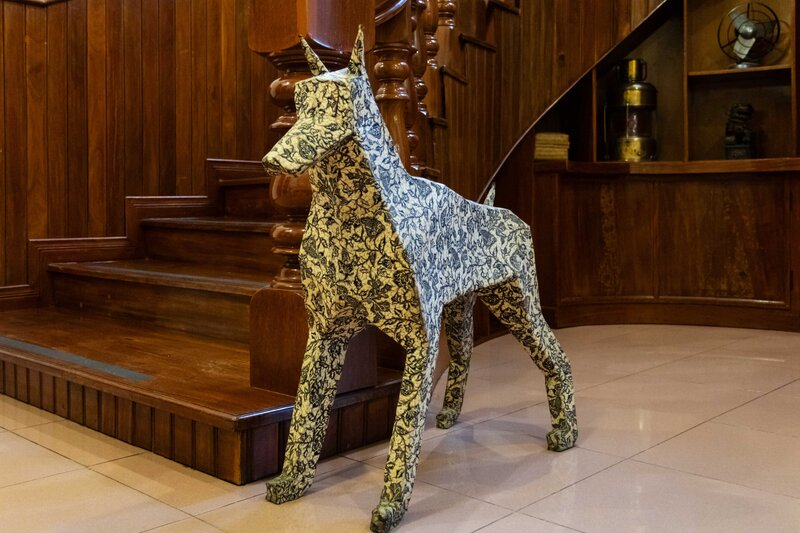
Life Size Doberman Sculpture Link to Life Size Doberman Sculpture section
Origin: Jakarta, Indonesia. Paper-mache with batik design.
Silk Screen & Contemporary Painting Link to Silk Screen & Contemporary Painting section
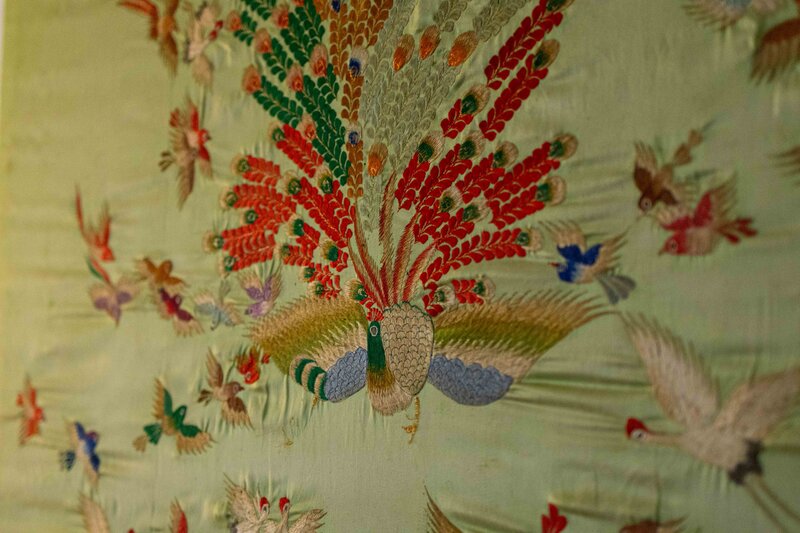
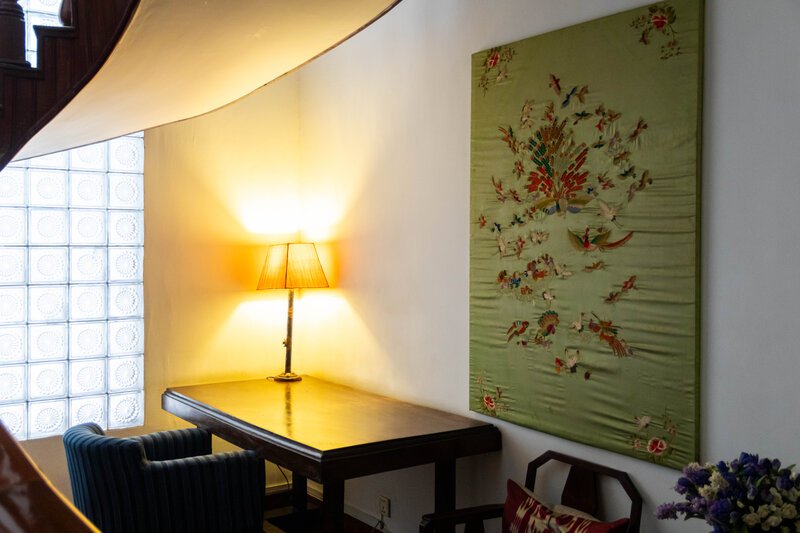
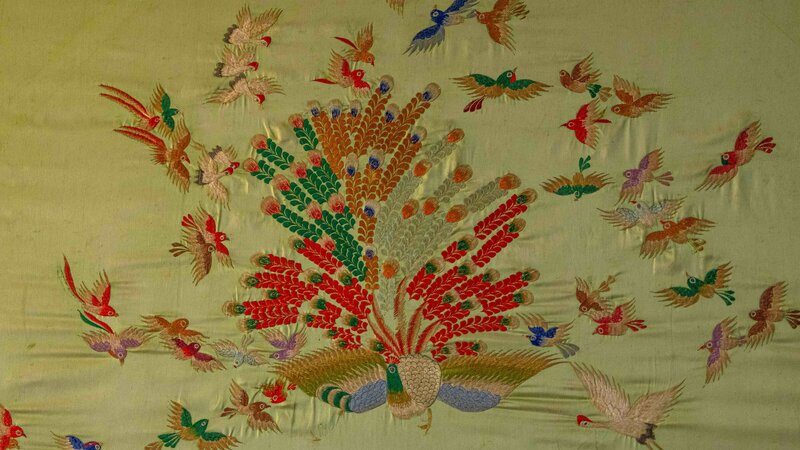
Chinese Silk Embroidered Screen
Rendering of "Hundred Birds Paying Homage to the Phoenix," a famous Chinese folkloric theme that has also inspired musicians [listen here an arrangement featuring the Suona, Chinese double-reed woodwind instrument]. Date unknown.
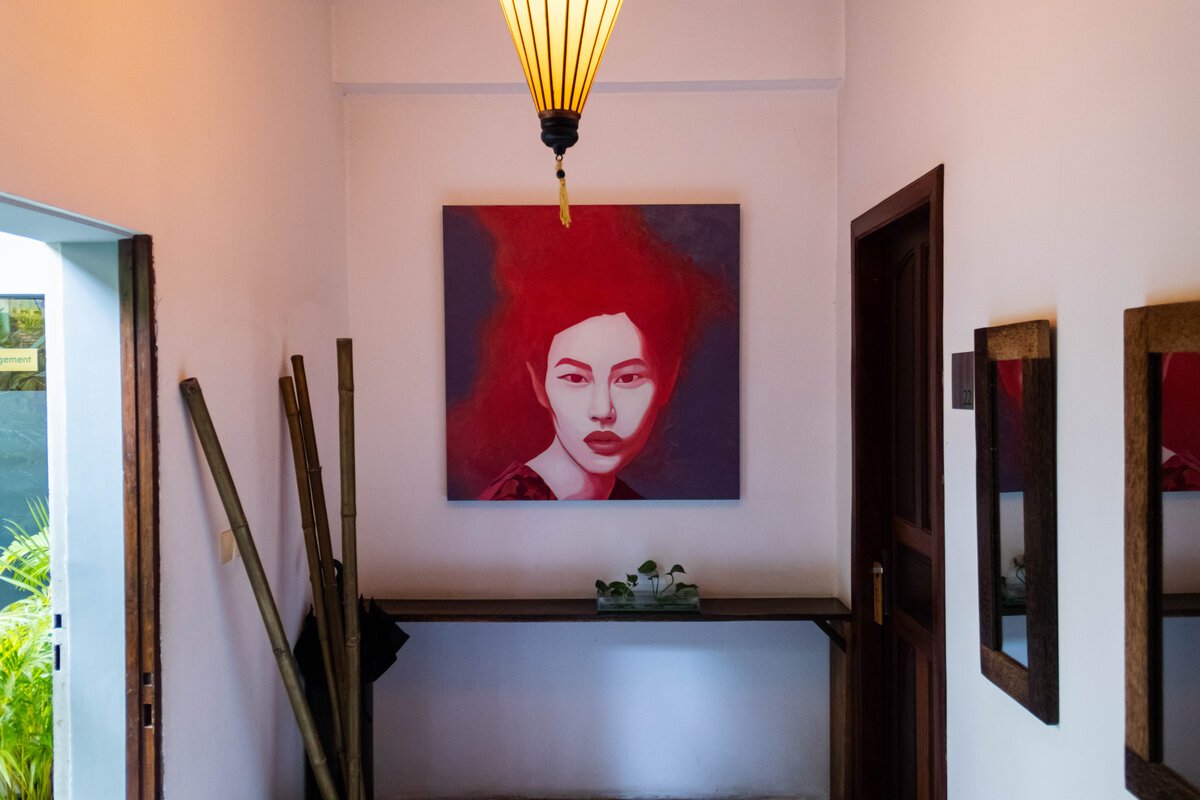
Portrait of a woman
Bought at Chatuchak Market, Bangkok, in 2015. Undated, unsigned.
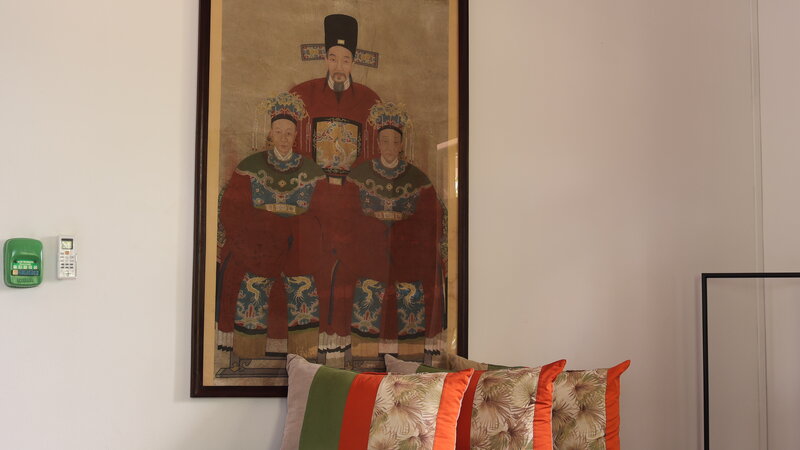
Chinese Ancestor Portraits Link to Chinese Ancestor Portraits section
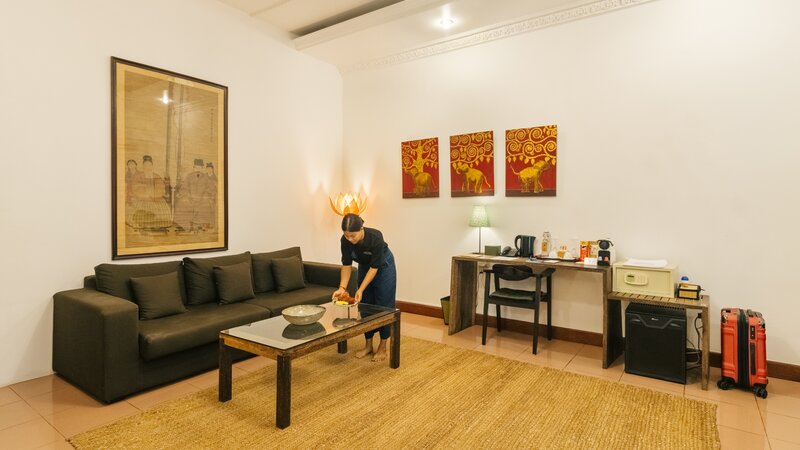
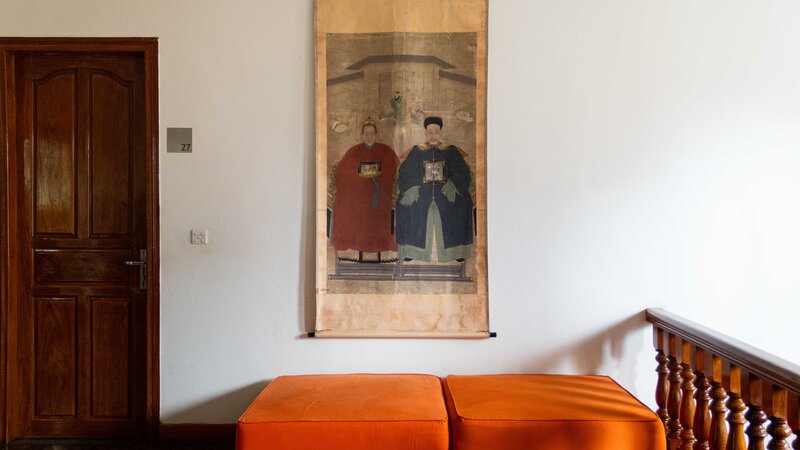
Found during various trips to Shanghai, China. Printed on paper. Dates unknown.
After or by Georg T. Hartmann? Link to After or by Georg T. Hartmann? section
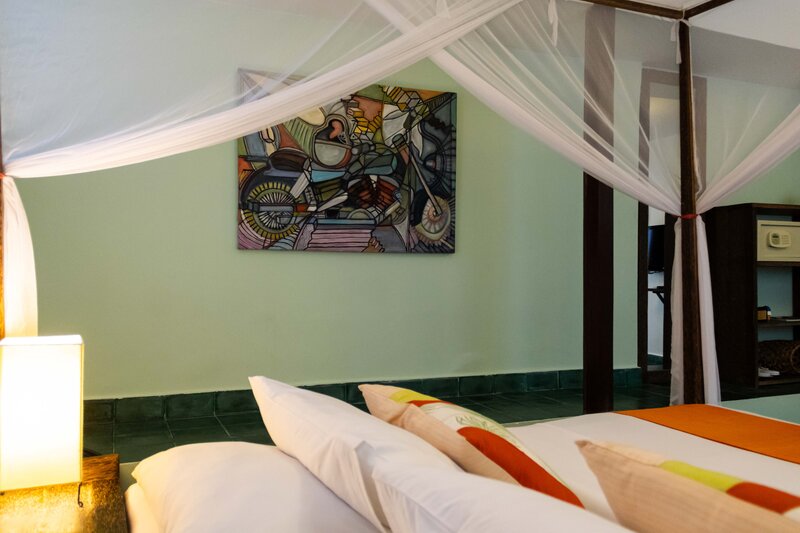
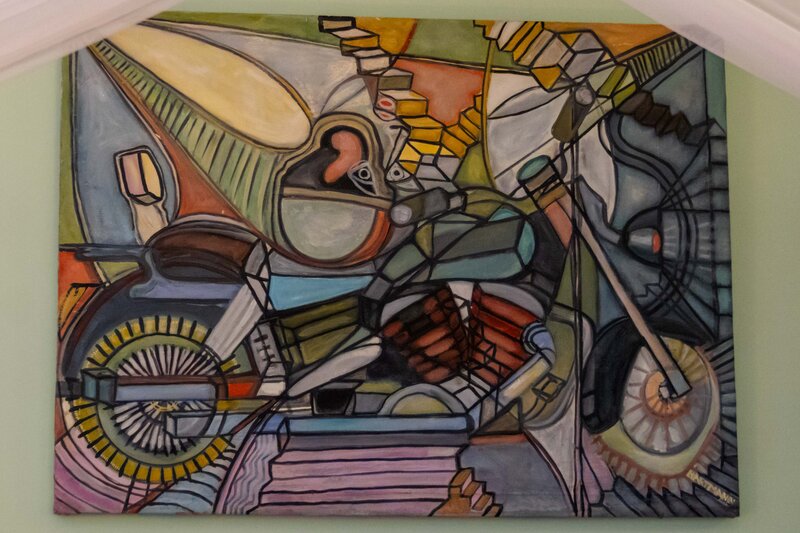
Unauthenticated painting by American painter and illustrator Georg T. Hartmann (1911-1989) known for his mechanical objects art.
Artefacts Link to Artefacts section
Myanmar Elephants, Paper Mache Link to Myanmar Elephants, Paper Mache section
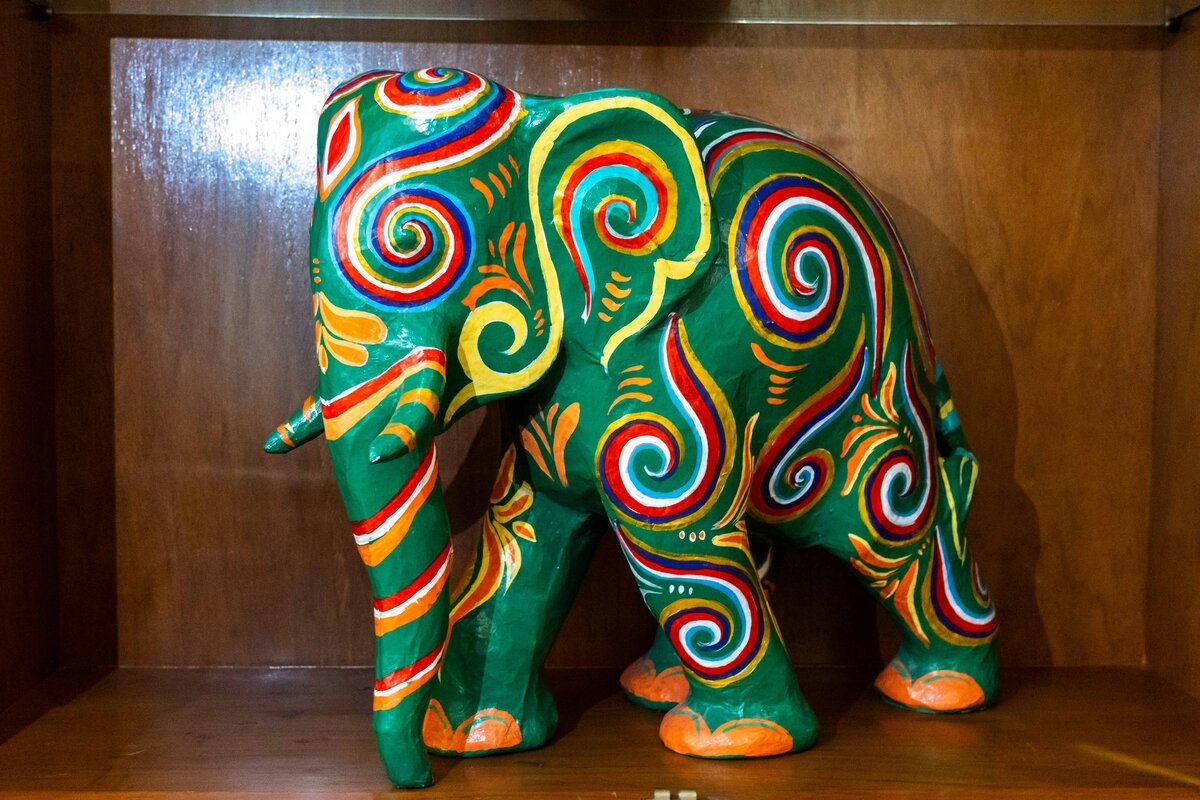
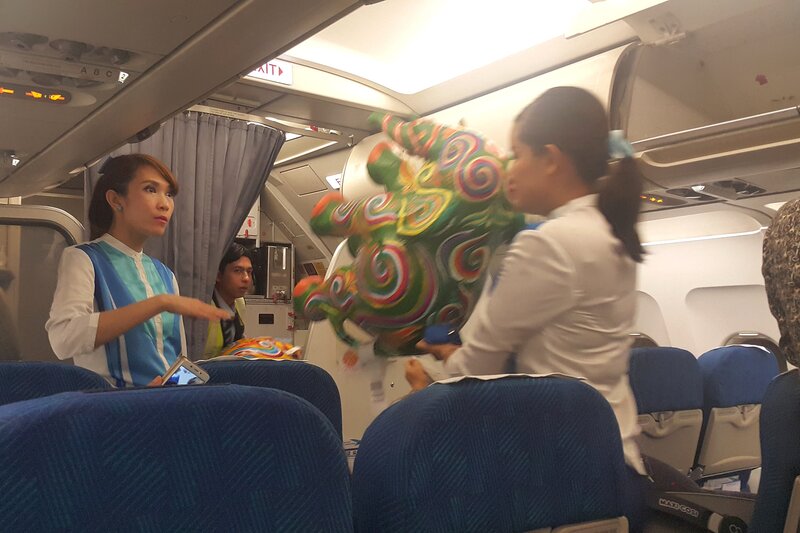
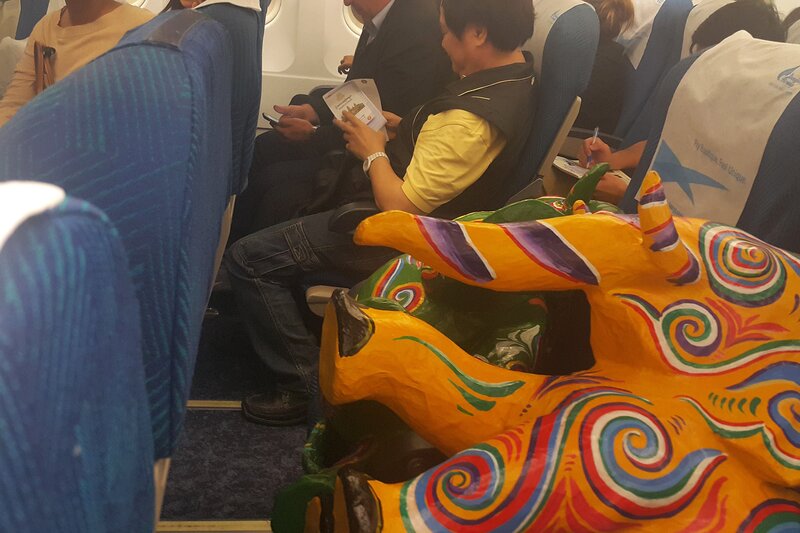
This set and the one following were found and bought in 2016 at Pomelo for Myanmar, a not-for-profit fair-trade boutique and craft shop in Yangon carrying locally made artisan products.
As Myanmar airport security were concerned that the elephants would get damaged in the luggage, they decided to assign them their own seats on board. Since the paper-maché sculptures were too large to go through the X-ray machine, it was decided they would be trusted and exempted. We remain grateful to ground staff and air crew members for that.
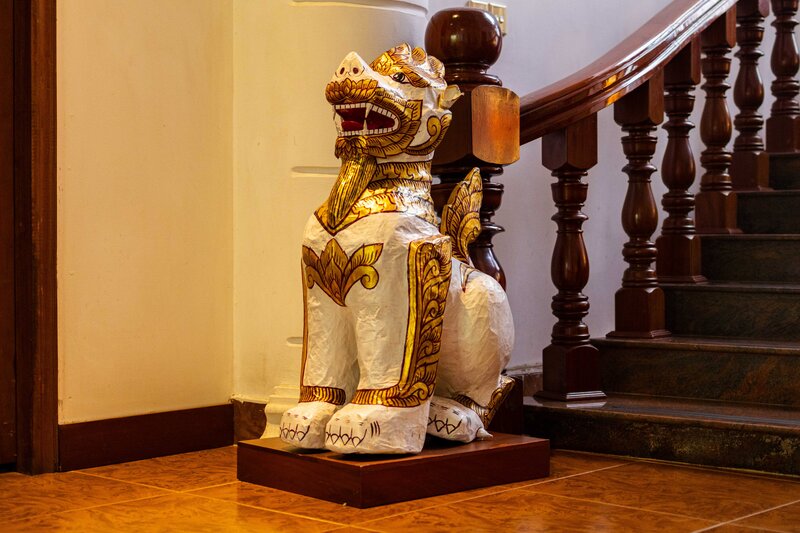
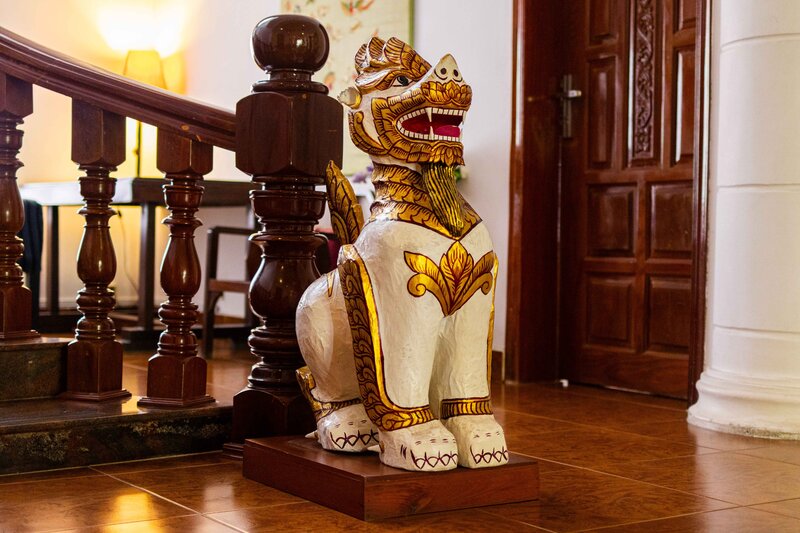
Myanmar Lions, Paper Mache Link to Myanmar Lions, Paper Mache section
Also from Pomelo Shop, Yangon, Myanmar, and brought to Cambodia as carry-ons on another 2016 flight.
Guardian Lions Link to Guardian Lions section
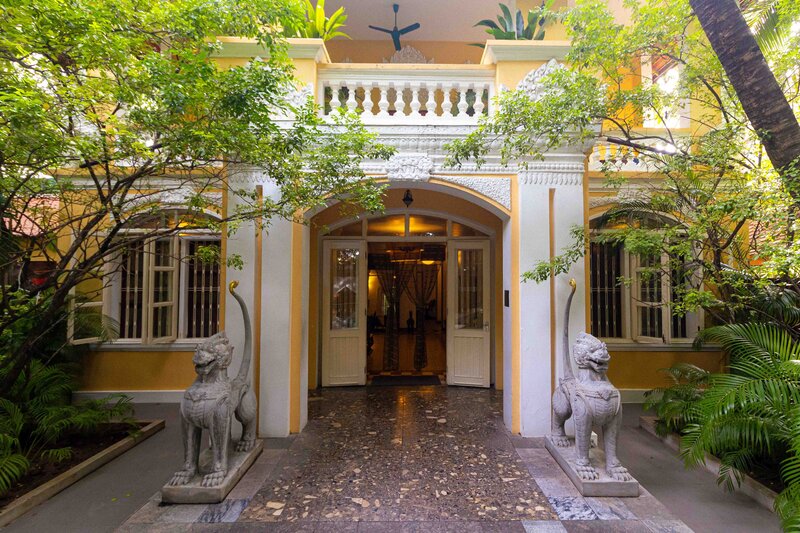
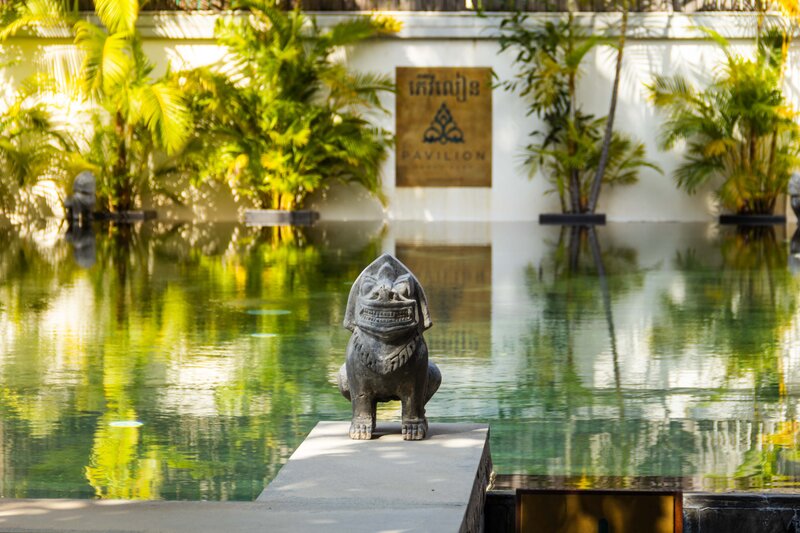
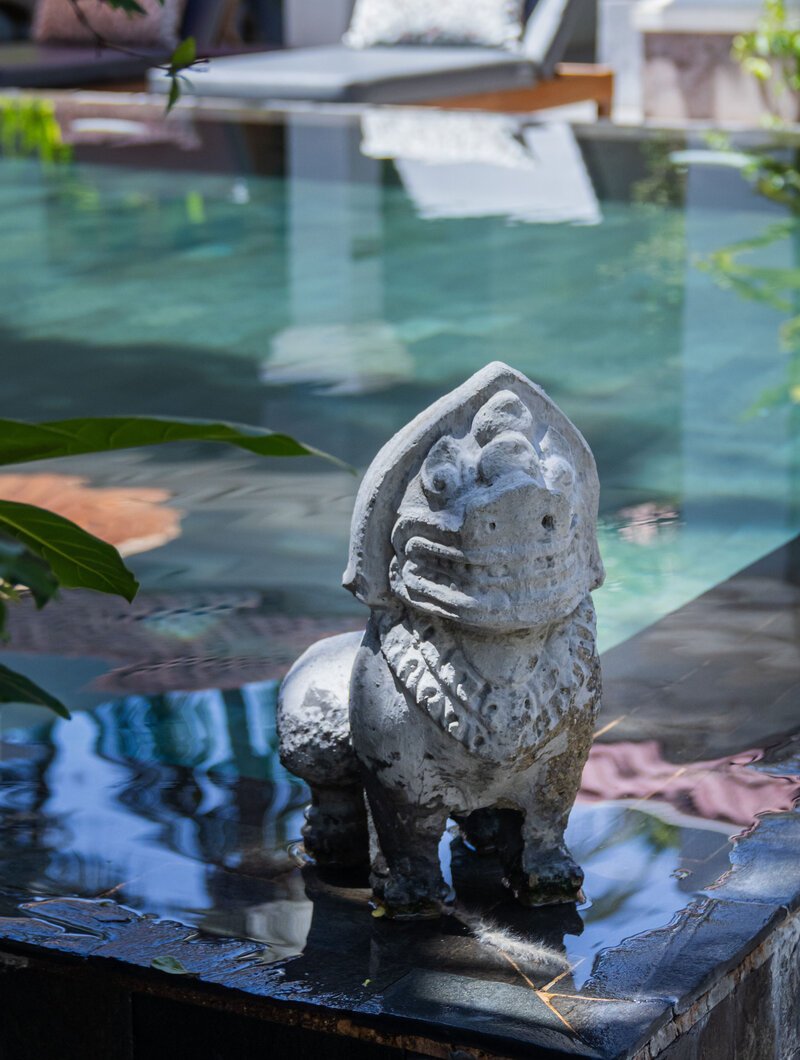
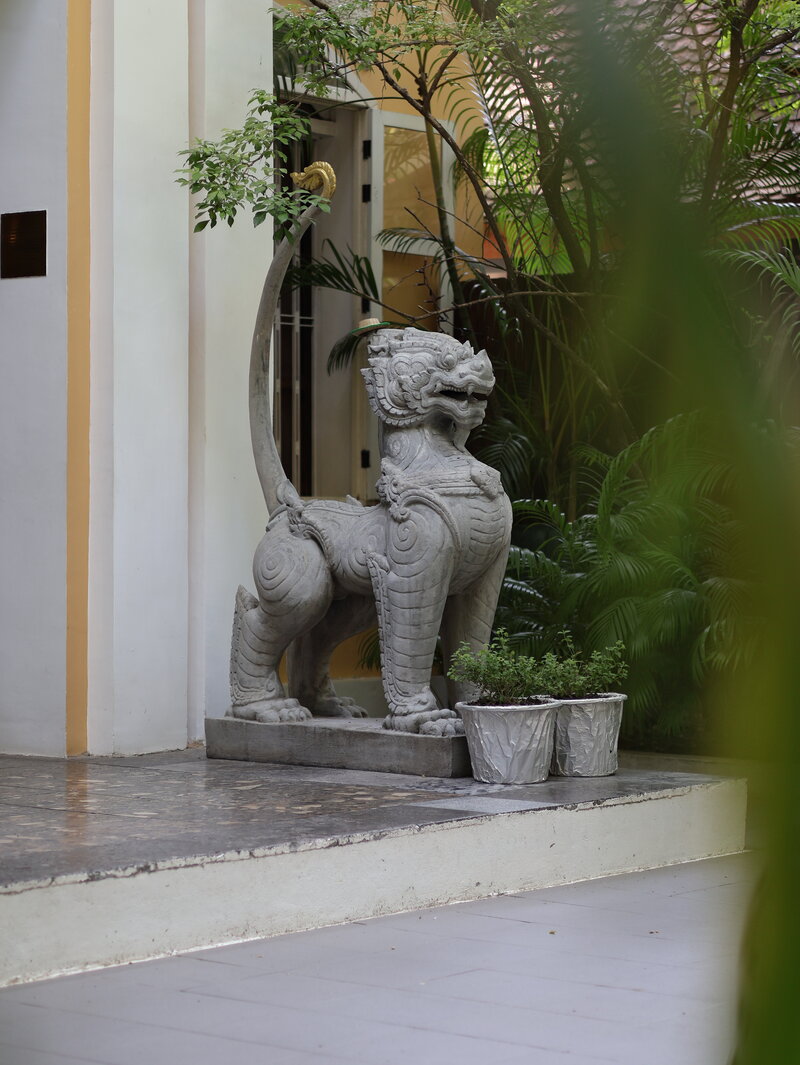
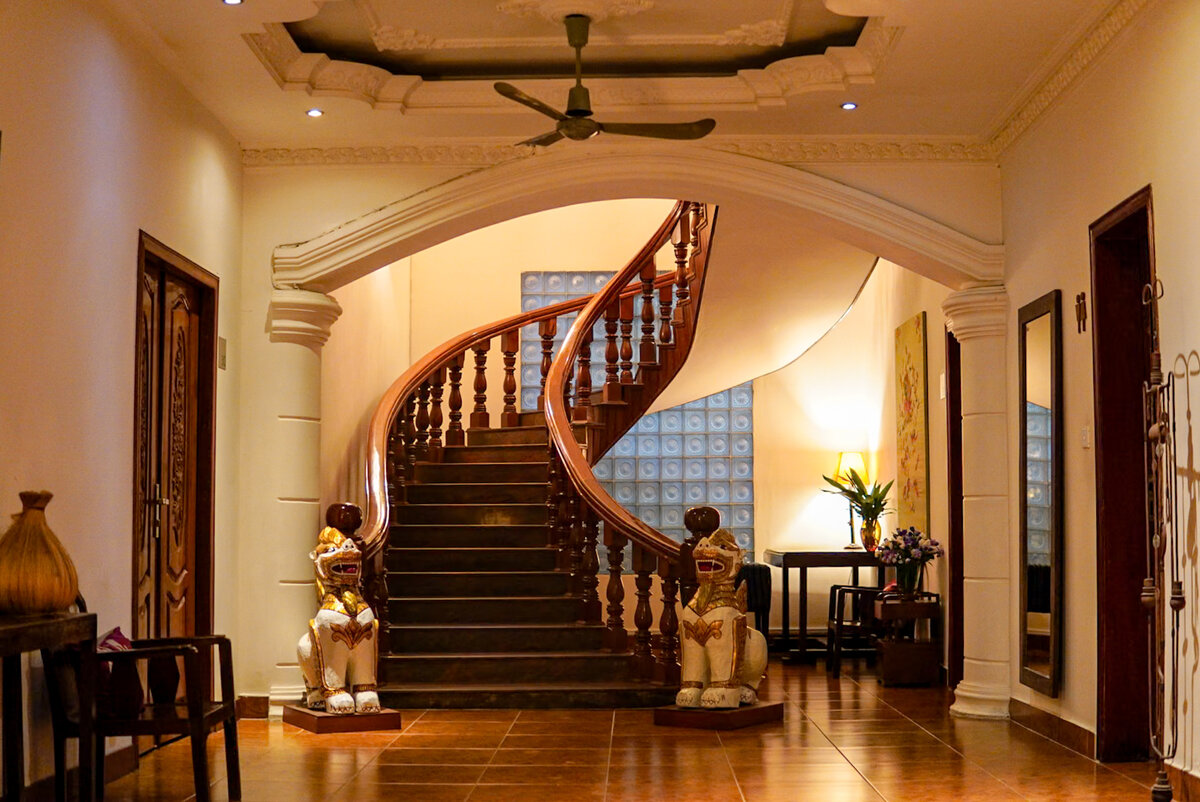
Singha [សឹង្ហ in Khmer, pronounced soeng] is the Guardian Lion found in Ancient Cambodian iconography and in modern representations. Adopted as the MAADS mascot, these mythical, benevolent creatures can be seen troughout Pavilion gardens and across other MAADS properties.
Cement statue makers have often customized the traditional guardian lion with long, extended tails. Those at Pavilion were purchased at a shop near Street 278, at walking distance from Pavilion in Phnom Penh.
Funerary Guardians, Jarai Tribal Art. Link to Funerary Guardians, Jarai Tribal Art. section
Non-activated copies* of funerary guardian statues, Jarai Tribal Art. Origin: Northeastern Ratanakiri Province, Cambodia.
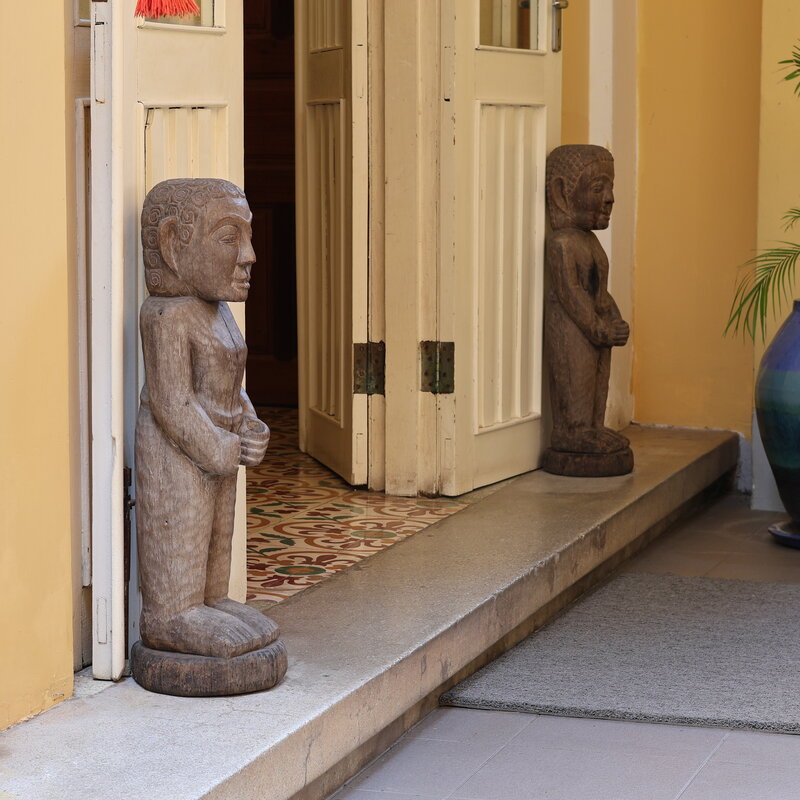
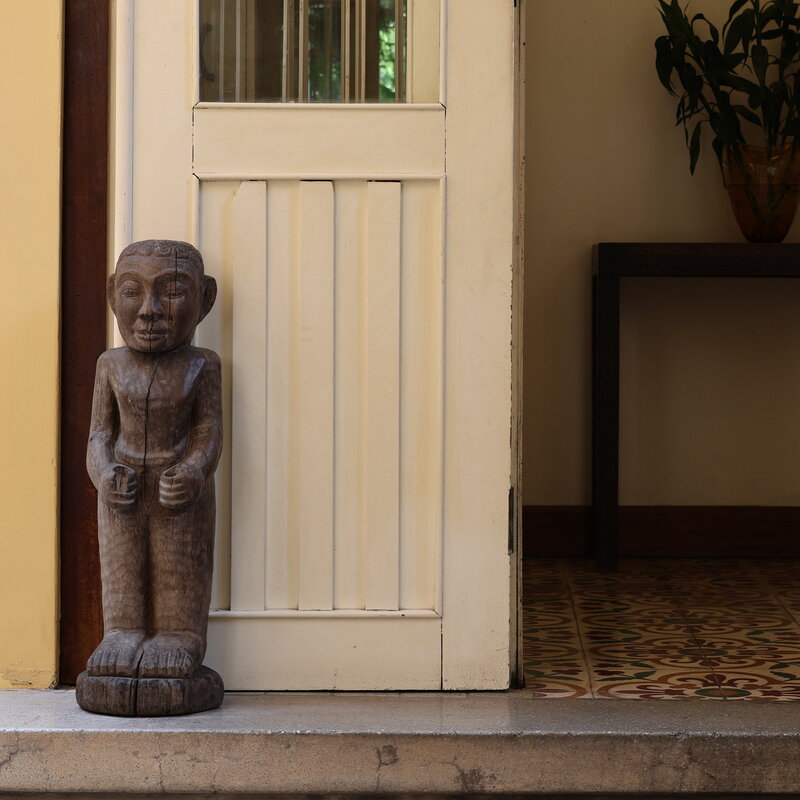
(*) 'Non-activated sculptures': these objects have not undergone a ritual of consecration or spiritual activation, or have been removed from this symbolic realm.
Mancala Board Link to Mancala Board section
Origin: Cambodia
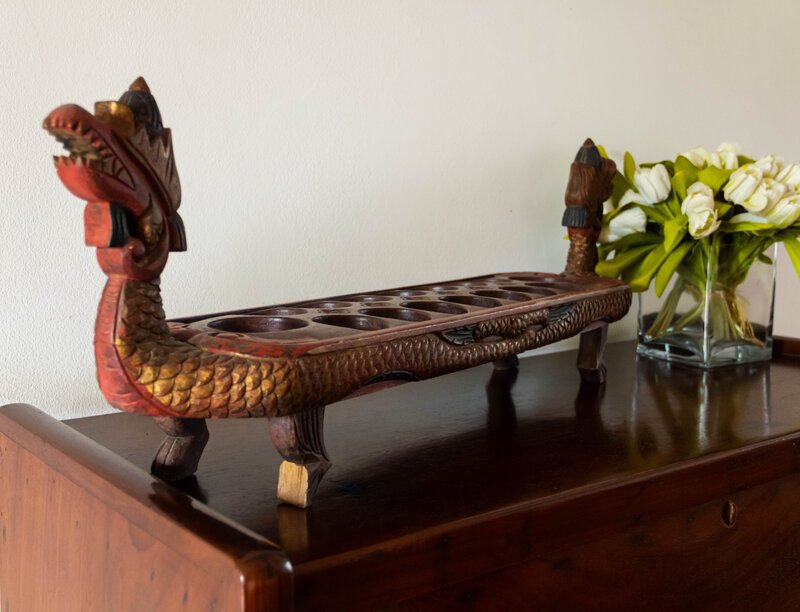
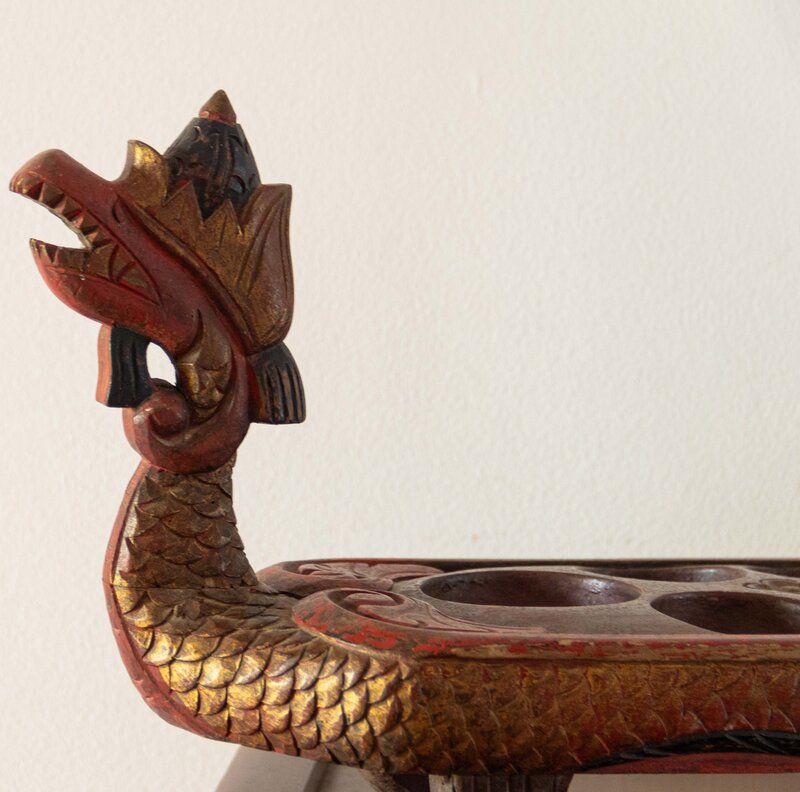
Mancala board in decorated wood from Cambodia. Mancala [possibly from Arabic 'minqalah', meaning 'to move', 'to transfer'] is often held as the oldest board game worldwide, and is still being played in Africa, part of South America, East and Southeast Asia. It consists of moving pieces (small stones, cowrie shells, pottery fragments...) across bowls dug in the board, and can be played just on a plane surface or right on the ground.
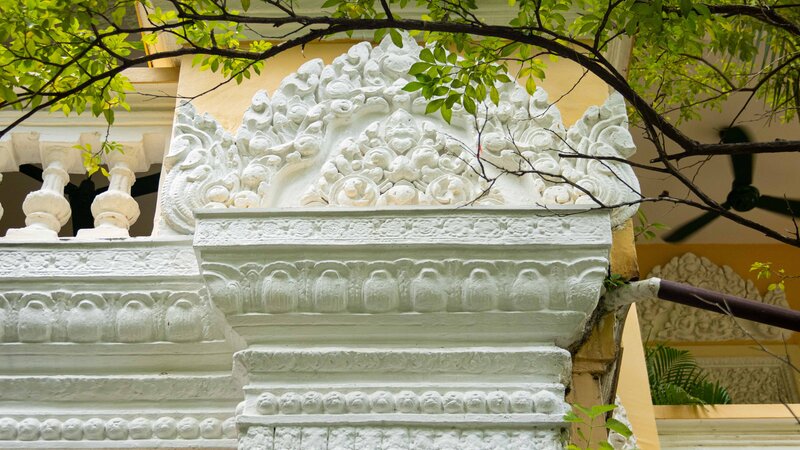
Decorative Items (Architectural) Link to Decorative Items (Architectural) section
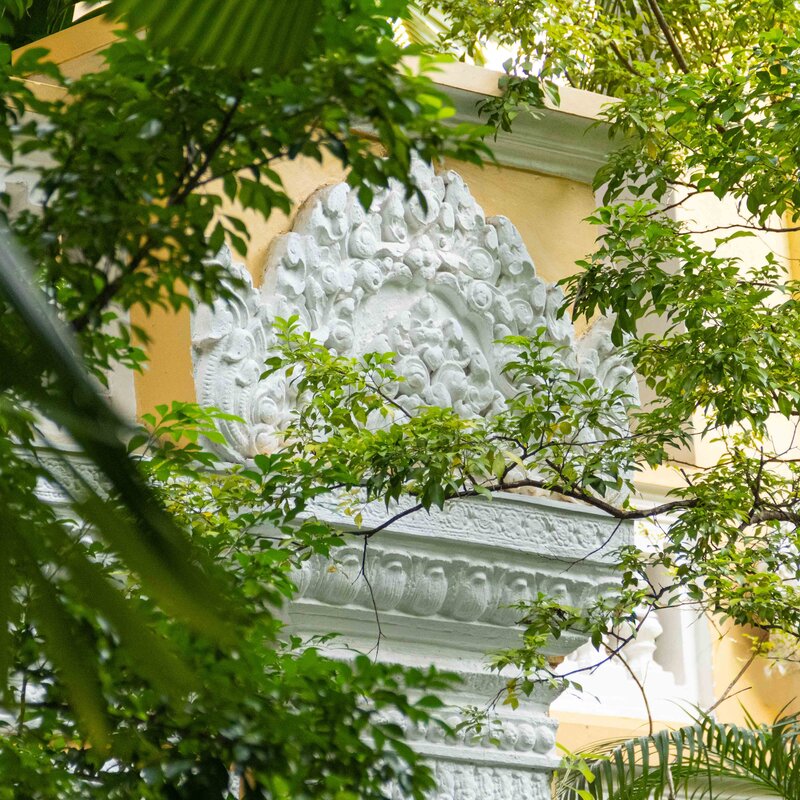
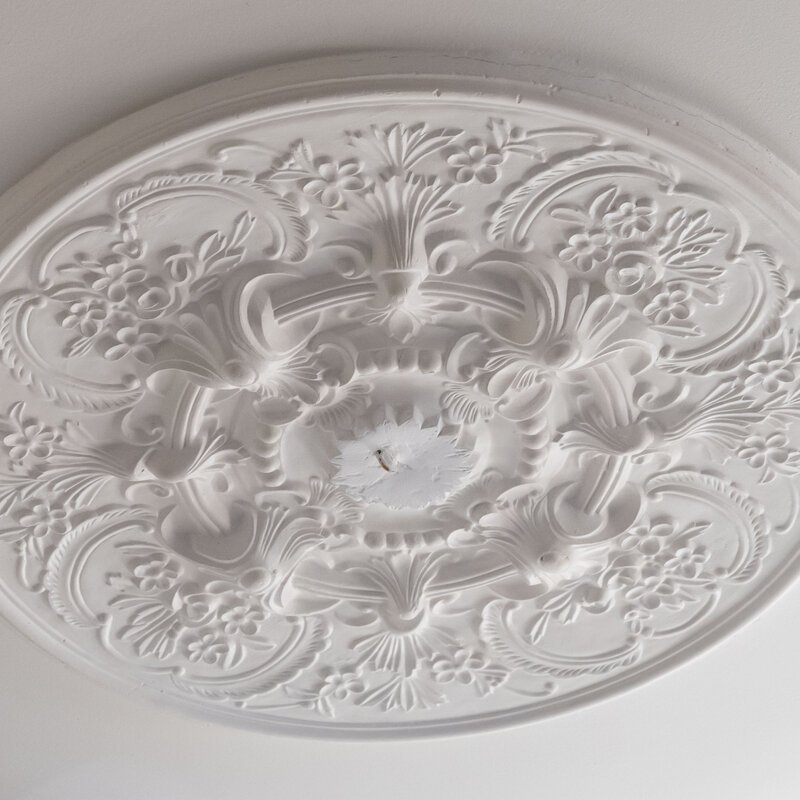
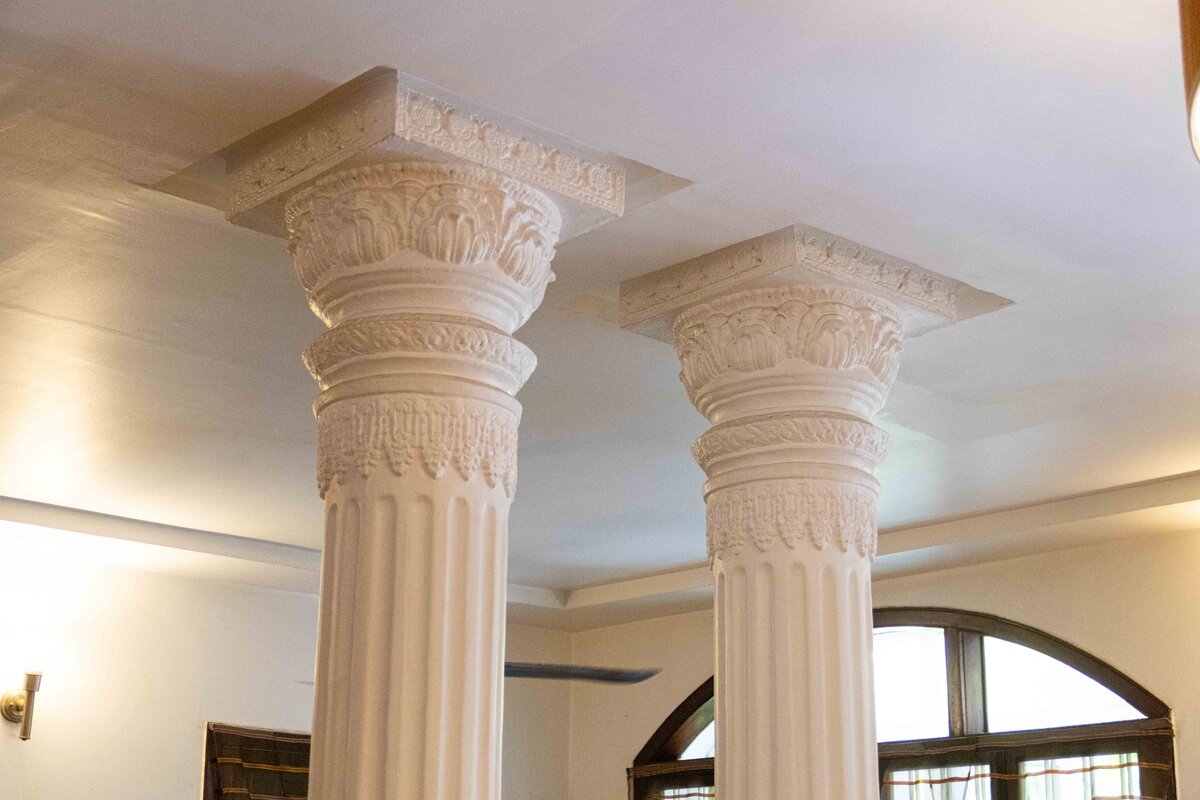
Moldings, lintel friezes, roof ornaments, that can be seen across Pavilion's four period buildings (1920s to 1960s)
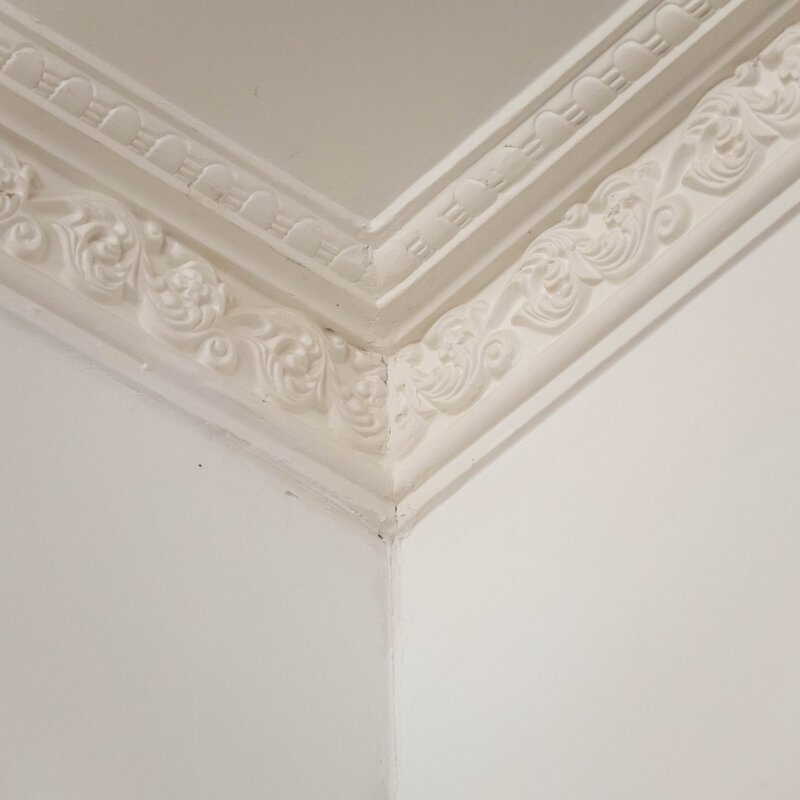
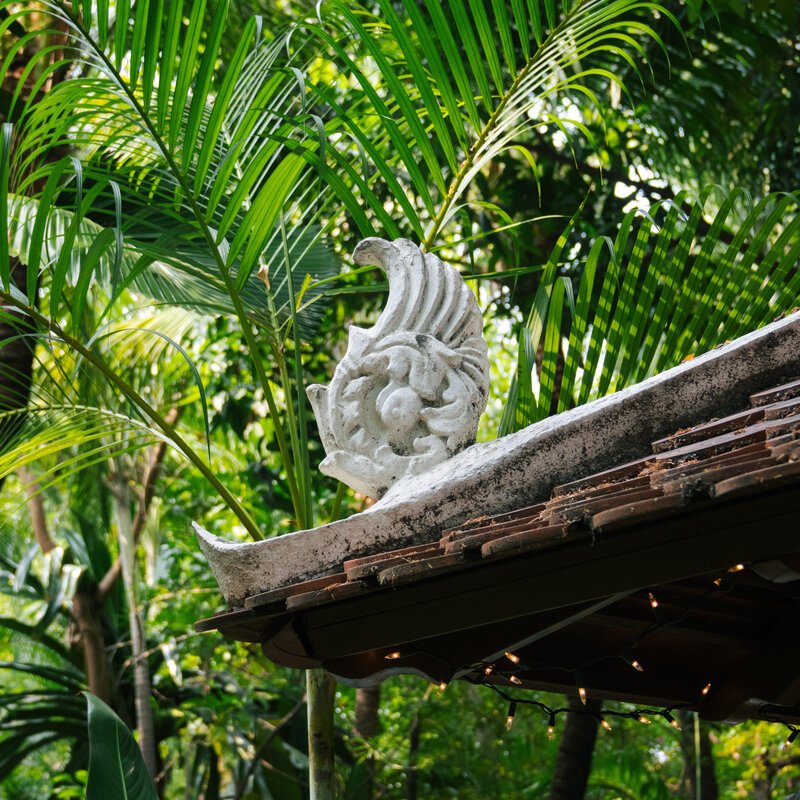
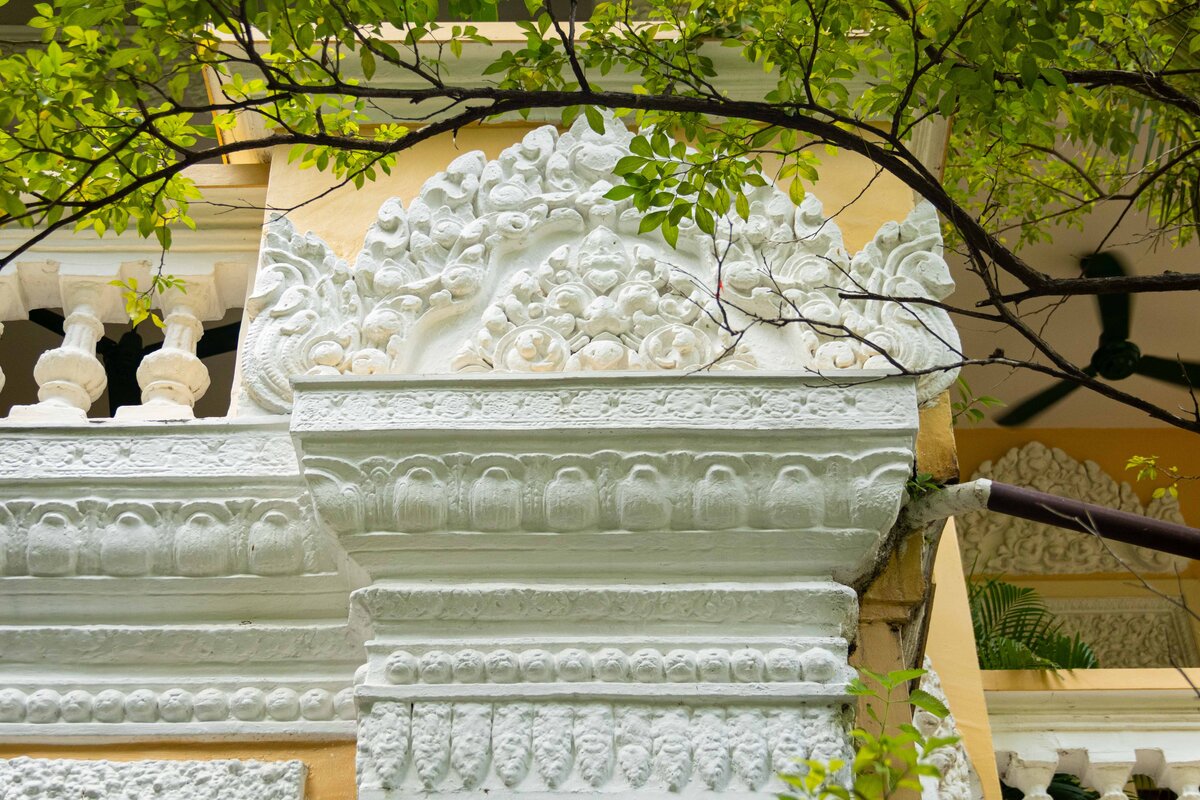
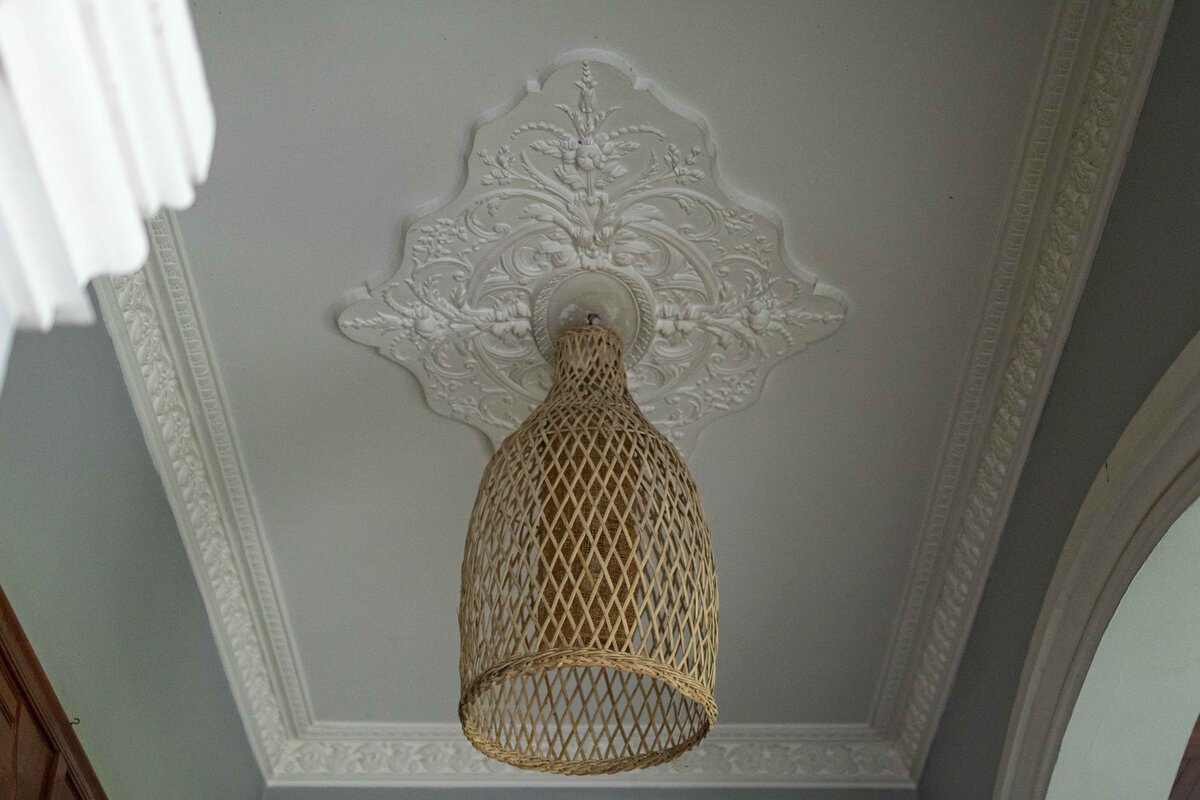
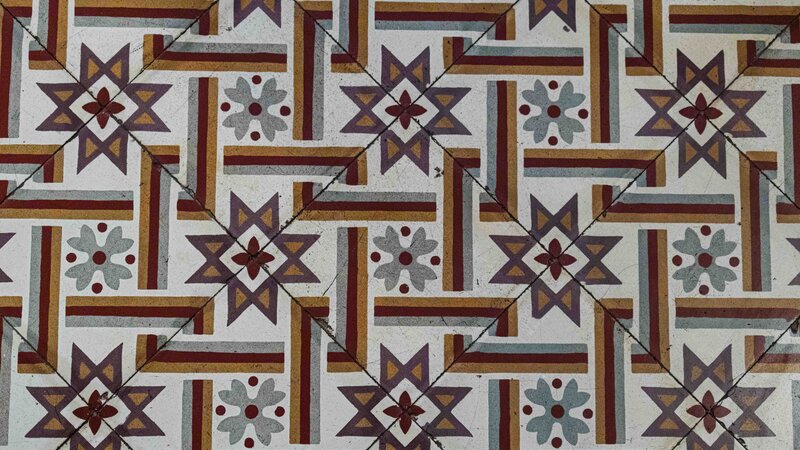
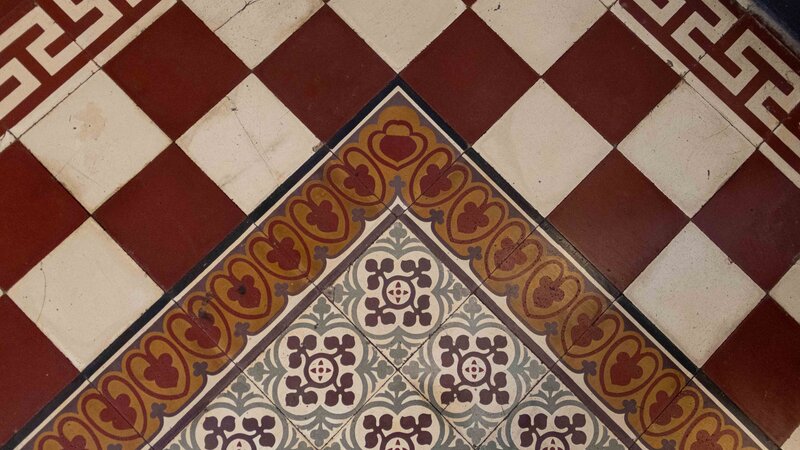
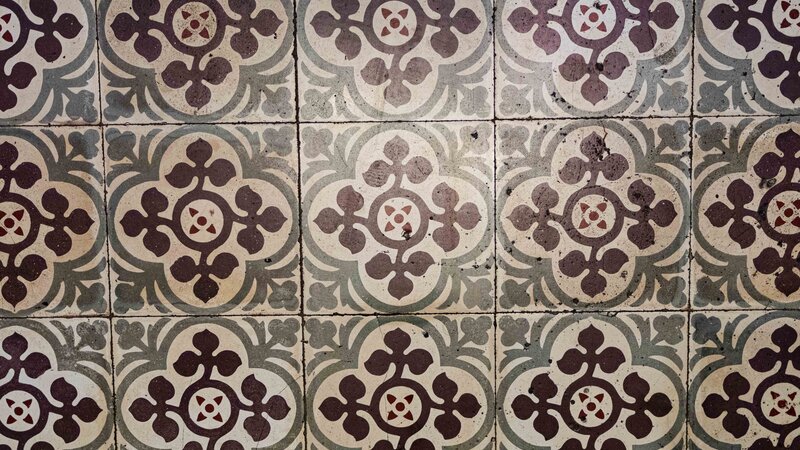
Vintage Cement Tiles Link to Vintage Cement Tiles section
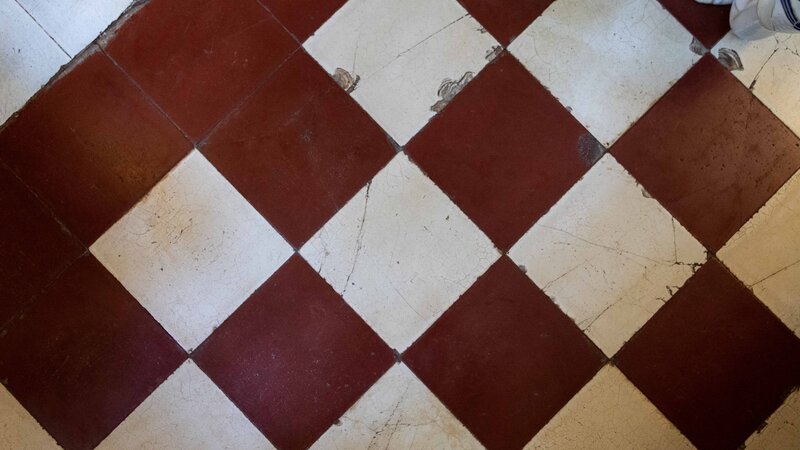
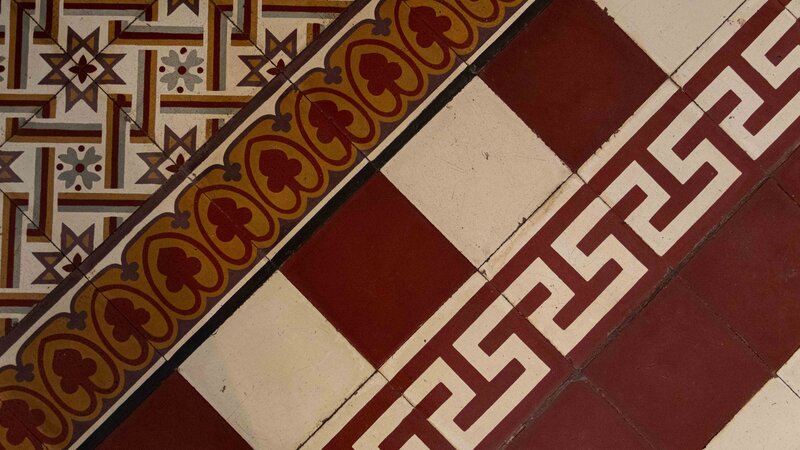
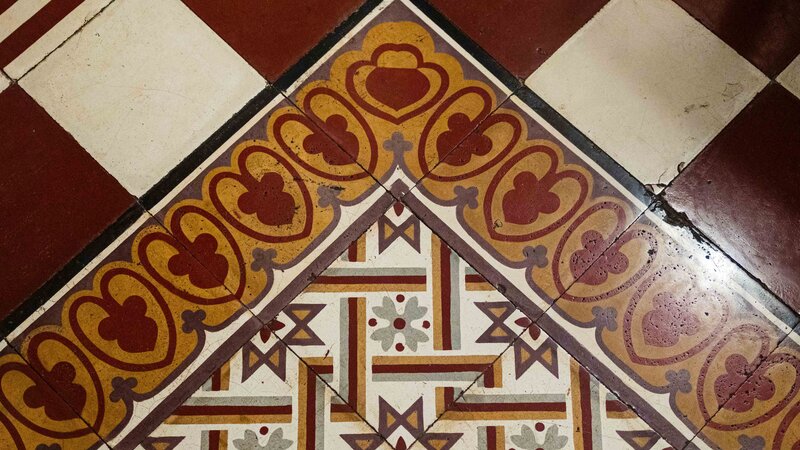
From the 1930s, gracing the main historic building at Pavilion.
Antiques Link to Antiques section
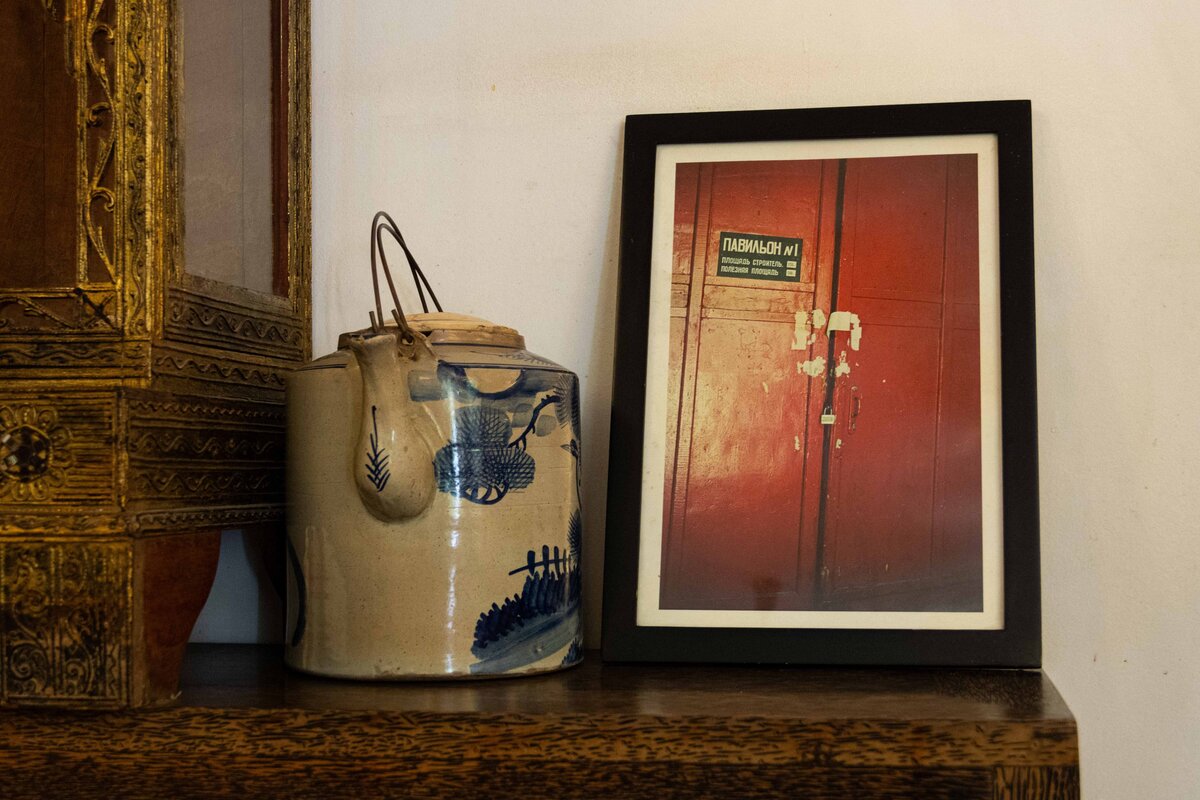
Russian Door Sign, 1991 Link to Russian Door Sign, 1991 section
Photograph of a door at Mosfilm (National Movie Studios), Moscow, taken shortly before the collapse of Soviet Union in December 1991. The sign in cyrillic characters reads 'Pavilion N. 1'.
MORE COMING UP - UNDER CONSTRUCTION
A note about categorizing an uncategorizable collection
Paraphrasing James Joyce's Dedalus, we could say that Art manifests itself "when the mind is arrested and raised above desiring and loathing,” while, to quote Donna Tartt in Harper's Magazine (June 2024), "Artifice, or false art, orients us toward what is flashy and shallow."
In this realm of alert quietness, we have classified the current presentation under three categories:
- Art: paintings, sculptures, parts of art installation; signed works and any other items not considered as artefacts & antiques.
- Artefacts: decorative objects made, shaped, or modified by humans, typically holding cultural, historical, or archaeological significance.
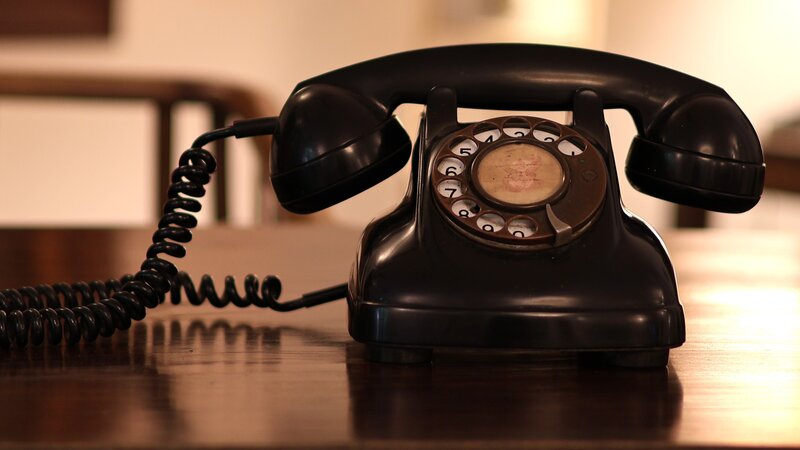
- Antiques: pieces of furniture, shop signs, items classified as ‘antiques’ even when they're less than 100 years old.
